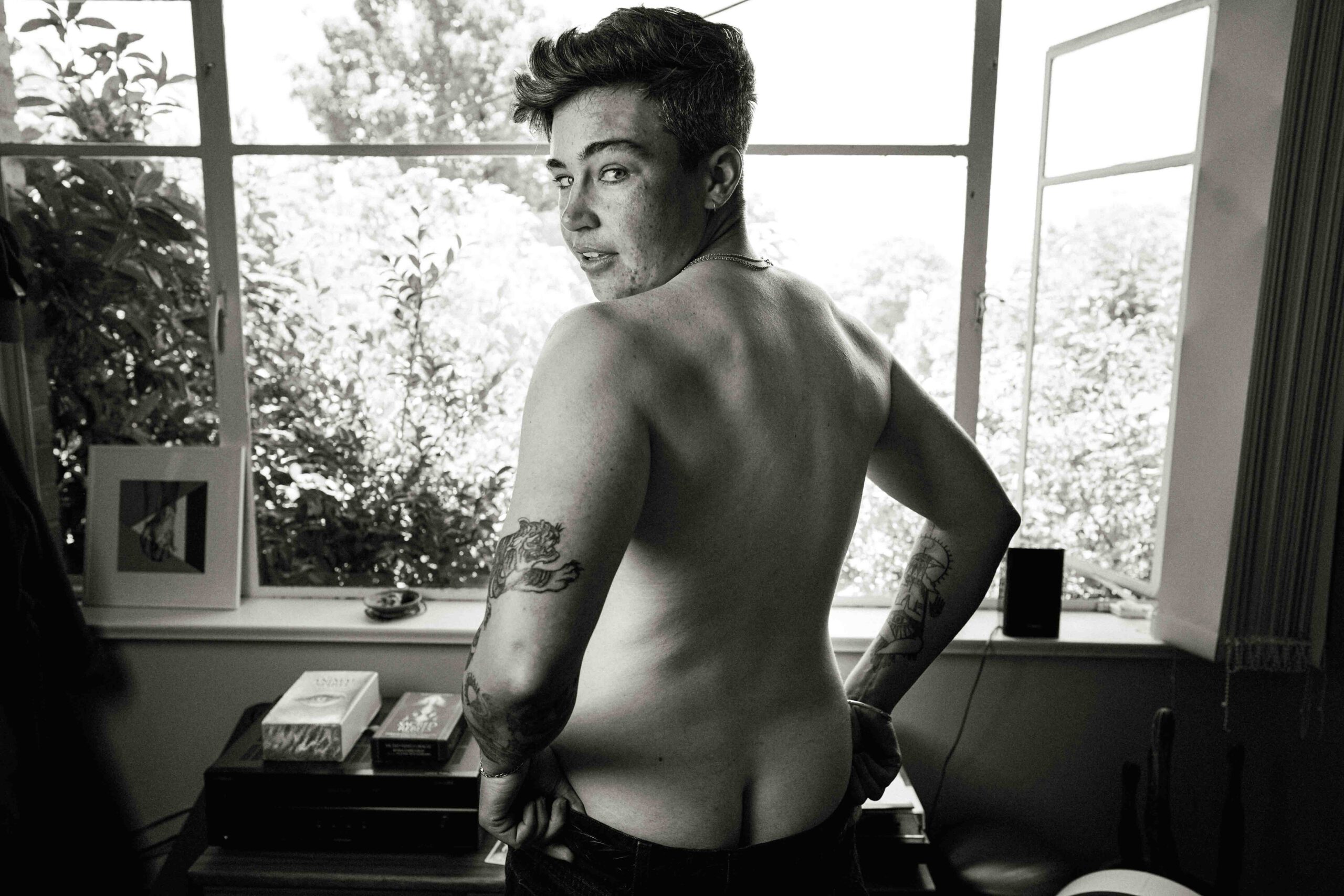
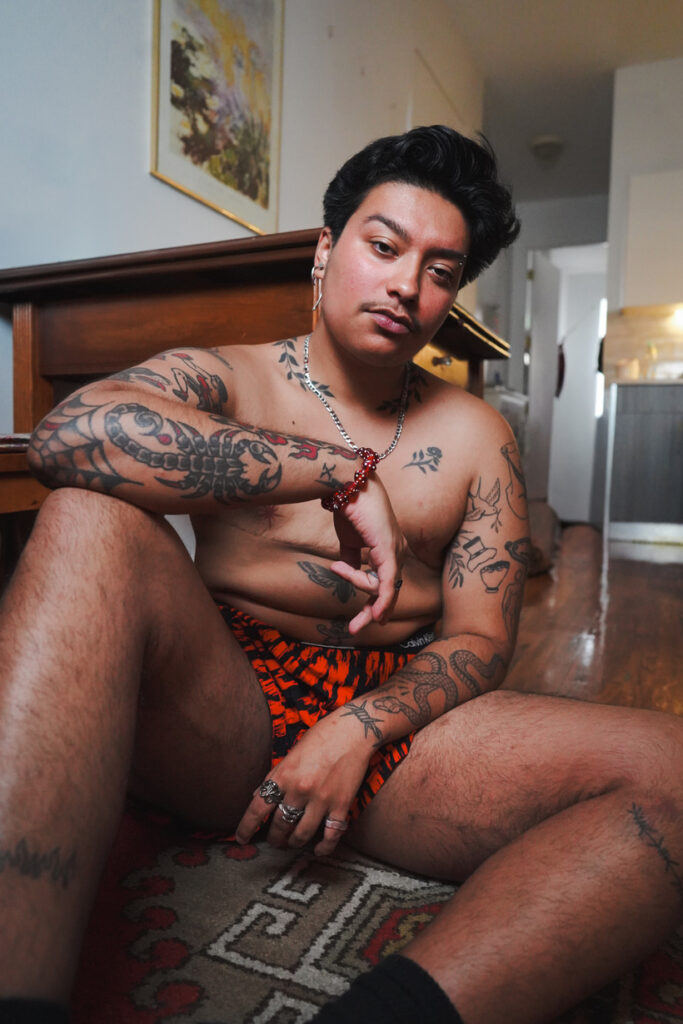
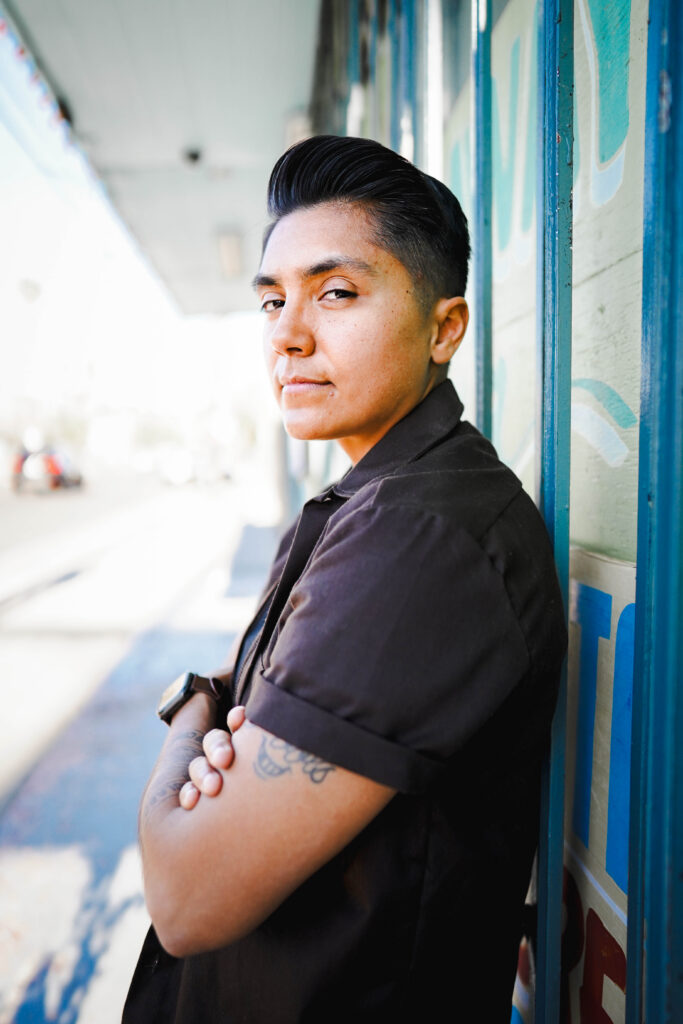
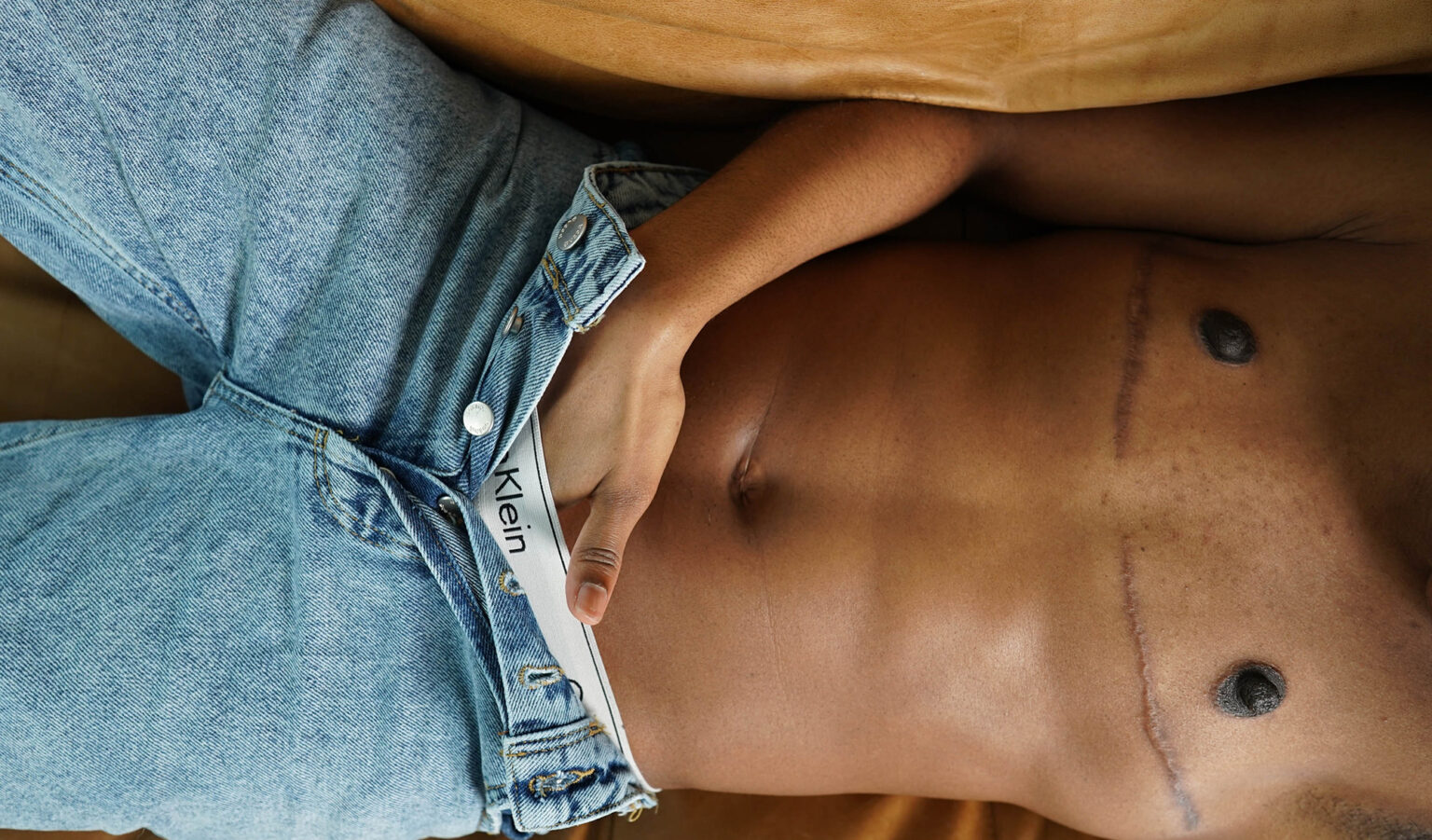
Butch Whispers: Ro White
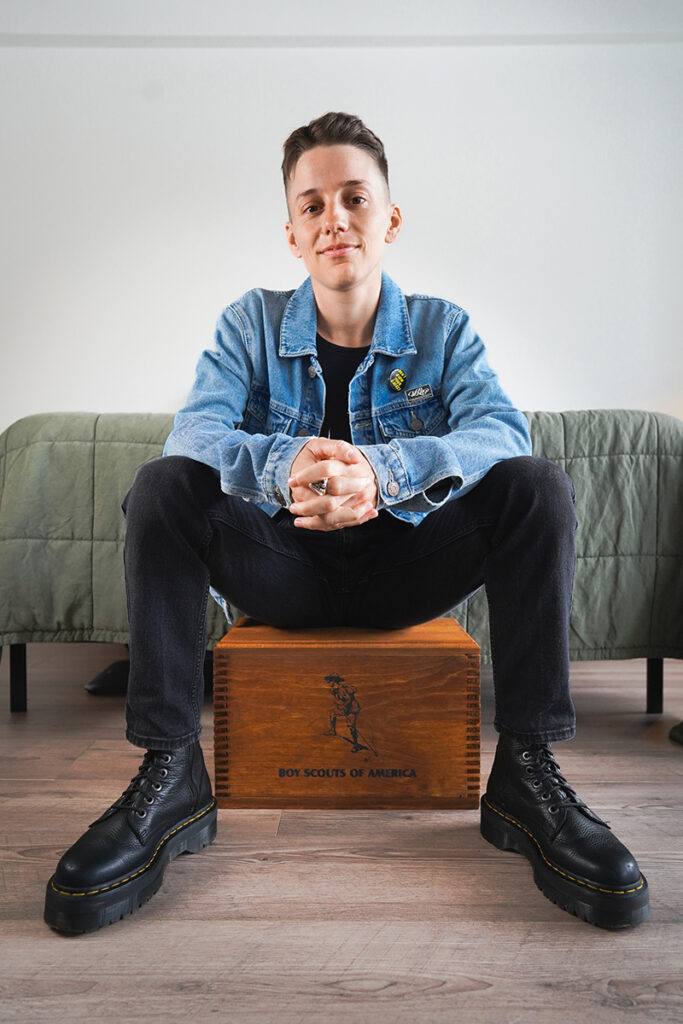
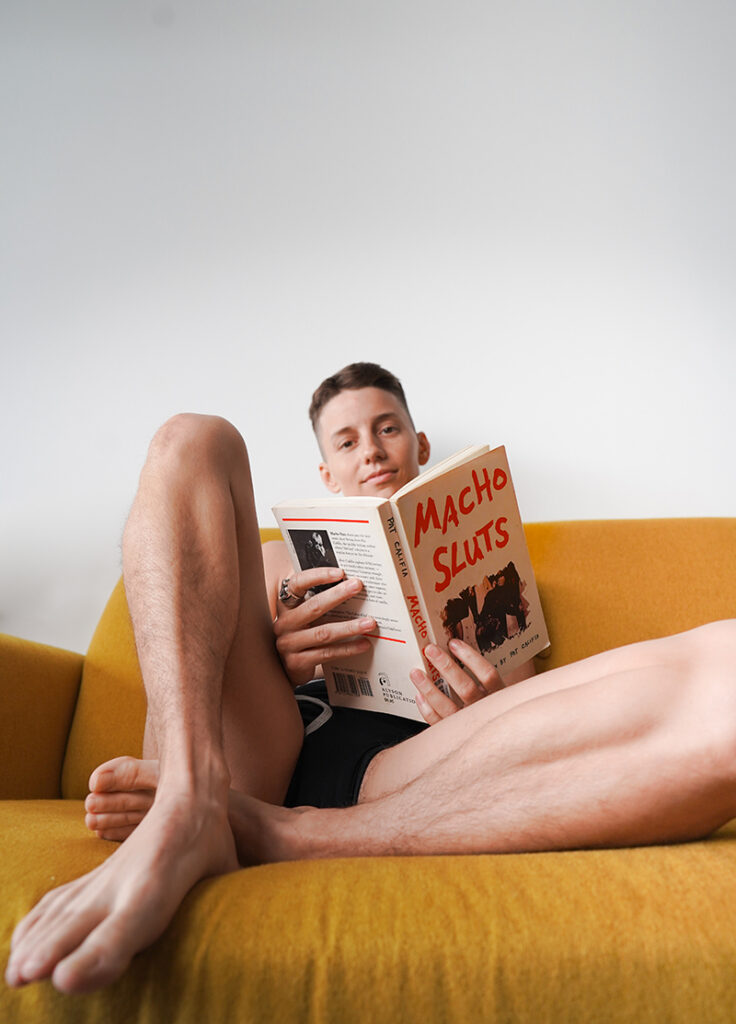
“The word Butch communicates my lived experience most clearly, even though I don’t know what the hell my pronouns are. For me, “butch” is more than a gender expression. Calling myself butch honors my queer historical lineage, my erotic energy, and my role in my community.”
1. Can you recall the first time you heard the word ‘butch’?
I don’t remember the first time I heard the word “butch,” but I do remember watching “Pat” on Saturday Night Live. My family would laugh while SNL performers asked the androgynous character leading questions to determine Pat’s gender, and I laughed along with them. I assumed that this bumbling character must be a butch.
When I was 15, I came out to a family member who was unsurprised and expressed support. Then they joked, “Just don’t be all butchy, ok?” That statement affirmed the falsehoods I’d already learned: that butches are ugly, pathetic, and utterly sexless.
I spent my high school years and the first few months of college in femme drag. I figured that if I were going to get bullied by peers and adults for being queer, I could at least avoid getting bullied for my appearance. Plus, I wanted to attract potential partners, and as far as I knew, looking “like a girl” was the only way to do that.
Once I finally embraced a gender expression that felt comfortable and authentic, it took years for me to see myself as desirable. Now I’ve embraced my perpetual boyishness as one of my most valuable assets.
2. What is the most defining or transformative experience you’ve had in connection to your butchness?
I came to understand myself as butch through femme friends, mentors, and lovers who saw me before I could see myself. They nurtured my confidence, demonstrated resilience and integrity, and taught me how to embrace and care for the parts of myself that some revile.
A few years ago, I started intentionally seeking butch friends and mentors. The support network I’ve built has helped me re-contextualize my past and envision what my future might bring.
My butch friends are warm, compassionate, and handsome as hell, and they’ve helped me feel worthy of love.
1. Can you recall the first time you heard the word ‘butch’?
I don’t remember the first time I heard the word “butch,” but I do remember watching “Pat” on Saturday Night Live. My family would laugh while SNL performers asked the androgynous character leading questions to determine Pat’s gender, and I laughed along with them. I assumed that this bumbling character must be a butch.
When I was 15, I came out to a family member who was unsurprised and expressed support. Then they joked, “Just don’t be all butchy, ok?” That statement affirmed the falsehoods I’d already learned: that butches are ugly, pathetic, and utterly sexless.
I spent my high school years and the first few months of college in femme drag. I figured that if I were going to get bullied by peers and adults for being queer, I could at least avoid getting bullied for my appearance. Plus, I wanted to attract potential partners, and as far as I knew, looking “like a girl” was the only way to do that.
Once I finally embraced a gender expression that felt comfortable and authentic, it took years for me to see myself as desirable. Now I’ve embraced my perpetual boyishness as one of my most valuable assets.
2. What is the most defining or transformative experience you’ve had in connection to your butchness?
I came to understand myself as butch through femme friends, mentors, and lovers who saw me before I could see myself. They nurtured my confidence, demonstrated resilience and integrity, and taught me how to embrace and care for the parts of myself that some revile.
A few years ago, I started intentionally seeking butch friends and mentors. The support network I’ve built has helped me re-contextualize my past and envision what my future might bring.
My butch friends are warm, compassionate, and handsome as hell, and they’ve helped me feel worthy of love.
I’ve been called ugly by people I love. I overhear strangers discussing my gender and my body hair. Some have questioned why women would date me when they deserve “a real man.” Being treated like everyone's problem has led me to have my guard up most of the time, even around people I care about. I’m actively working to unlearn that.
3. How would you define butchphobia in your own words?
No matter what words I’ve used to describe my gender at any given time, my gender expression has been met with confusion. About half of the time, strangers read me as a teenage boy. Sometimes it’s funny, but it has also led to awkward and frustrating situations.
After I ditched makeup and cut my hair in college, I was denied access to my school library for months because I didn’t look like my student ID. I’ve been kicked out of countless women’s locker rooms and bathrooms, including a bathroom at an LGBTQ+ center. When I travel, I’m regularly stopped by TSA agents who think I’m a young boy with a “chest anomaly” (sometimes I wear a sports bra) or a “genital anomaly” (they expect me to have a dick in my pants—and sometimes I do).
4. In what ways do you express or embody masculinity that differ from societal expectations?
I used to believe that in order to call myself “butch,” I’d have to be a towering, gruff beefcake—something I can’t physically or energetically embody.
Now I believe that if cis men get to own a wide range of masculinities, then butches get to do that, too—and when we do it, we do it better.
When I was growing up, the masculine figures in my family were nerds and caretakers, more boyish than macho, and that’s the flavor of masculinity I’ve embraced within myself.
3. How would you define butchphobia in your own words?
No matter what words I’ve used to describe my gender at any given time, my gender expression has been met with confusion. About half of the time, strangers read me as a teenage boy. Sometimes it’s funny, but it has also led to awkward and frustrating situations.
After I ditched makeup and cut my hair in college, I was denied access to my school library for months because I didn’t look like my student ID. I’ve been kicked out of countless women’s locker rooms and bathrooms, including a bathroom at an LGBTQ+ center. When I travel, I’m regularly stopped by TSA agents who think I’m a young boy with a “chest anomaly” (sometimes I wear a sports bra) or a “genital anomaly” (they expect me to have a dick in my pants—and sometimes I do).
4. In what ways do you express or embody masculinity that differ from societal expectations?
I used to believe that in order to call myself “butch,” I’d have to be a towering, gruff beefcake—something I can’t physically or energetically embody.
Now I believe that if cis men get to own a wide range of masculinities, then butches get to do that, too—and when we do it, we do it better.
When I was growing up, the masculine figures in my family were nerds and caretakers, more boyish than macho, and that’s the flavor of masculinity I’ve embraced within myself.