Meet A Butch: Haleena Necessary
I was born and raised in Tacoma, Washington, and my family is from Denmark. I attended public school all my life and began calling myself (or perhaps first being called) a tomboy from about 1st grade. I am sure many people thought I would grow out of it, and there was a period of time in middle school where it was assumed to be behind me, but masculinity was fundamental inside me. It returned again in an epiphanic moment in 8th grade when I finally had the courage to call myself a lesbian, and return to the expression of masculinity I had so missed. This feeling never wavered. As my language and identity grew, my Butchness inherently grew alongside it. Since moving to Chicago and finishing graduate school, my confidence in calling myself a Butch—before anything else—has cemented. Now I work as a school psychologist and love being the Butch role model I never had growing up.
Can you recall the first time you heard the word ‘Butch’ ?
After coming out as a lesbian in junior high, I knew masculinity was a large part of my expression. Unfortunately, the history and warmth that the Butch identity has for me now, was no more than a misinterpretation of gender expression for young teenage Haleena. I’d been called a tomboy and a he-she from day one of 1st grade when I showed up to school with short hair and hand-me-downs from my older brothers, but Butch was never on the radar until junior high. It was new to me at that time, and it was scary.
The Butch Lesbians I had seen on TV and been told about were made out to be dirty, dangerous, male-wannabees by my peers and the adults around me. “I’m not Butch,” I would think. “I’m just masc”…maybe people are less scared of that label.” Unbeknownst to me, the Butch identity was so much more than a label, but in the world I inhabited, it was a word used to make masculine lesbians fearful of being too masculine for others. I hid from the word for a long time, but as I grew, and my understanding of queer history grew along with me, it began to rock back and forth in my mind.
How do you define Butchphobia?
Butchphobia, at best, is a misunderstanding and misattribution of our history and experiences, and at worst, the violence we face at the hands of oppressors who are fearful of our existence. I have experienced this range from a young age, whether it was the language used against me, or boys in my primary classes unzipping my clothes to see what they thought I was hiding under there. It developed from this to a grave misuse of my masculinity against me. My refusal to press charges against my first girlfriend, even when offered the option, was in part due to a fear that people would never believe the masculine woman could ever be a victim of the feminine one. That was proven to me the first time I sought help. This fear continued into my late teen and adult life, where I quickly gained a phobia of what I know as the “Predatory Lesbian Stereotype.” I don’t think I could describe a single locker room to you, as my eyes were and continue to be non-stop glued to the ground out of fear of making anyone have to think about my presence there for more than a second.
Butchphobia has built distrust in many people, some even within the queer community. It has been a heavy task to learn to live my life fully in spite of this.
Is there something about your butch identity that you feel is often misunderstood?
I think in general the Butch identity is gravely misunderstood by almost everyone, even other queer people and lesbians. Butches don’t imitate masculinity, we improve upon it. We don’t seek to copy maleness, we redefine it.
This was what made me nervous about going on testosterone. I saw very few ways in which I could explain to people, especially non-butches, that this addition to my life was to build upon my Butch lesbian identity, to engage in self-creation, not to change to something new entirely.
I do not have an interest in mimicking heterosexuality. Quite the opposite, I seek to broaden what we know about queer and lesbian relationships by elevating the masculine and feminine and Butch-Femme dynamics that overlap.
Although I do wish more people understood this, I am still well aware of the world I live in. Understanding it myself so I can be most comfortable with who I am, regardless of others, is what is most important of all.
Have there been aspects of your masculinity that you’ve felt compelled to unlearn?
There have been times when I felt like I had to perform a certain way to be validated in my masculinity of course. But this was strongest before I grew into my Butch identity and weakest when I felt misunderstood by partners and loved ones who did not think of the Butch identity positively. These lesser moments are when I felt the greatest desire to prove myself in some way, which usually ended with me not being the person that I wanted to be and not being the person that people in my life needed me to be.
Development of my Butchness and the confidence that followed made the need to constantly prove something disappear more and more, until I was able to begin to unlearn patterns in my relationships that often left me, and other people hurt. Of course, I say begin, because a process like this takes a long time. In the months before meeting my current partner, I ended all my flings and situation-ships en masse and dedicated myself to seeking out community that cared for me as more than some imaginary masculine ideal in a made-up masc shortage.
This I initially found in a queer soccer team that has built itself into a haven for queer people of all backgrounds, often seeking first the camaraderie, and second the ball-kicking. The months that followed led me to my partner, and to lessons about myself I had been running from for a long time because I was too scared to face them alone.

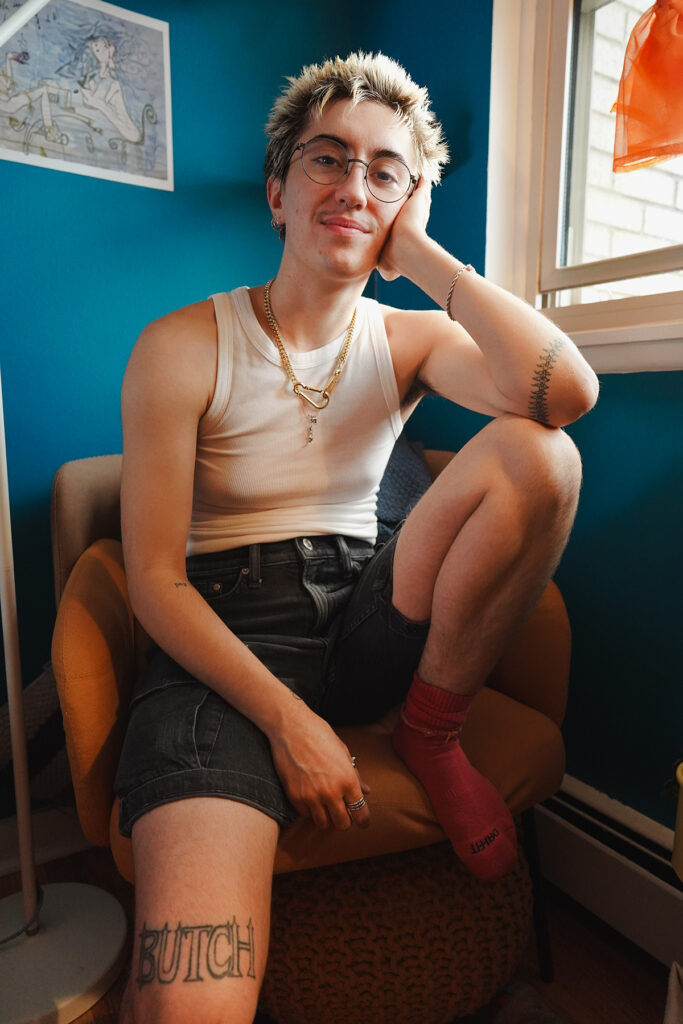
Can you recall the first time you heard the word ‘Butch’ ?
After coming out as a lesbian in junior high, I knew masculinity was a large part of my expression. Unfortunately, the history and warmth that the Butch identity has for me now, was no more than a misinterpretation of gender expression for young teenage Haleena. I’d been called a tomboy and a he-she from day one of 1st grade when I showed up to school with short hair and hand-me-downs from my older brothers, but Butch was never on the radar until junior high. It was new to me at that time, and it was scary.
The Butch Lesbians I had seen on TV and been told about were made out to be dirty, dangerous, male-wannabees by my peers and the adults around me. “I’m not Butch,” I would think. “I’m just masc”…maybe people are less scared of that label.” Unbeknownst to me, the Butch identity was so much more than a label, but in the world I inhabited, it was a word used to make masculine lesbians fearful of being too masculine for others. I hid from the word for a long time, but as I grew, and my understanding of queer history grew along with me, it began to rock back and forth in my mind.
How do you define Butchphobia?
Butchphobia, at best, is a misunderstanding and misattribution of our history and experiences, and at worst, the violence we face at the hands of oppressors who are fearful of our existence. I have experienced this range from a young age, whether it was the language used against me, or boys in my primary classes unzipping my clothes to see what they thought I was hiding under there. It developed from this to a grave misuse of my masculinity against me. My refusal to press charges against my first girlfriend, even when offered the option, was in part due to a fear that people would never believe the masculine woman could ever be a victim of the feminine one. That was proven to me the first time I sought help. This fear continued into my late teen and adult life, where I quickly gained a phobia of what I know as the “Predatory Lesbian Stereotype.” I don’t think I could describe a single locker room to you, as my eyes were and continue to be non-stop glued to the ground out of fear of making anyone have to think about my presence there for more than a second.
Butchphobia has built distrust in many people, some even within the queer community. It has been a heavy task to learn to live my life fully in spite of this.
Is there something about your butch identity that you feel is often misunderstood?
I think in general the Butch identity is gravely misunderstood by almost everyone, even other queer people and lesbians. Butches don’t imitate masculinity, we improve upon it. We don’t seek to copy maleness, we redefine it.
This was what made me nervous about going on testosterone. I saw very few ways in which I could explain to people, especially non-butches, that this addition to my life was to build upon my Butch lesbian identity, to engage in self-creation, not to change to something new entirely.
I do not have an interest in mimicking heterosexuality. Quite the opposite, I seek to broaden what we know about queer and lesbian relationships by elevating the masculine and feminine and Butch-Femme dynamics that overlap.
Although I do wish more people understood this, I am still well aware of the world I live in. Understanding it myself so I can be most comfortable with who I am, regardless of others, is what is most important of all.
Have there been aspects of your masculinity that you’ve felt compelled to unlearn?
There have been times when I felt like I had to perform a certain way to be validated in my masculinity of course. But this was strongest before I grew into my Butch identity and weakest when I felt misunderstood by partners and loved ones who did not think of the Butch identity positively. These lesser moments are when I felt the greatest desire to prove myself in some way, which usually ended with me not being the person that I wanted to be and not being the person that people in my life needed me to be.
Development of my Butchness and the confidence that followed made the need to constantly prove something disappear more and more, until I was able to begin to unlearn patterns in my relationships that often left me, and other people hurt. Of course, I say begin, because a process like this takes a long time. In the months before meeting my current partner, I ended all my flings and situation-ships en masse and dedicated myself to seeking out community that cared for me as more than some imaginary masculine ideal in a made-up masc shortage.
This I initially found in a queer soccer team that has built itself into a haven for queer people of all backgrounds, often seeking first the camaraderie, and second the ball-kicking. The months that followed led me to my partner, and to lessons about myself I had been running from for a long time because I was too scared to face them alone.
The Butch Lesbians I had seen on TV and been told about were made out to be dirty, dangerous, male-wannabees by my peers and the adults around me. “I’m not Butch,” I would think. “I’m just masc"...maybe people are less scared of that label?
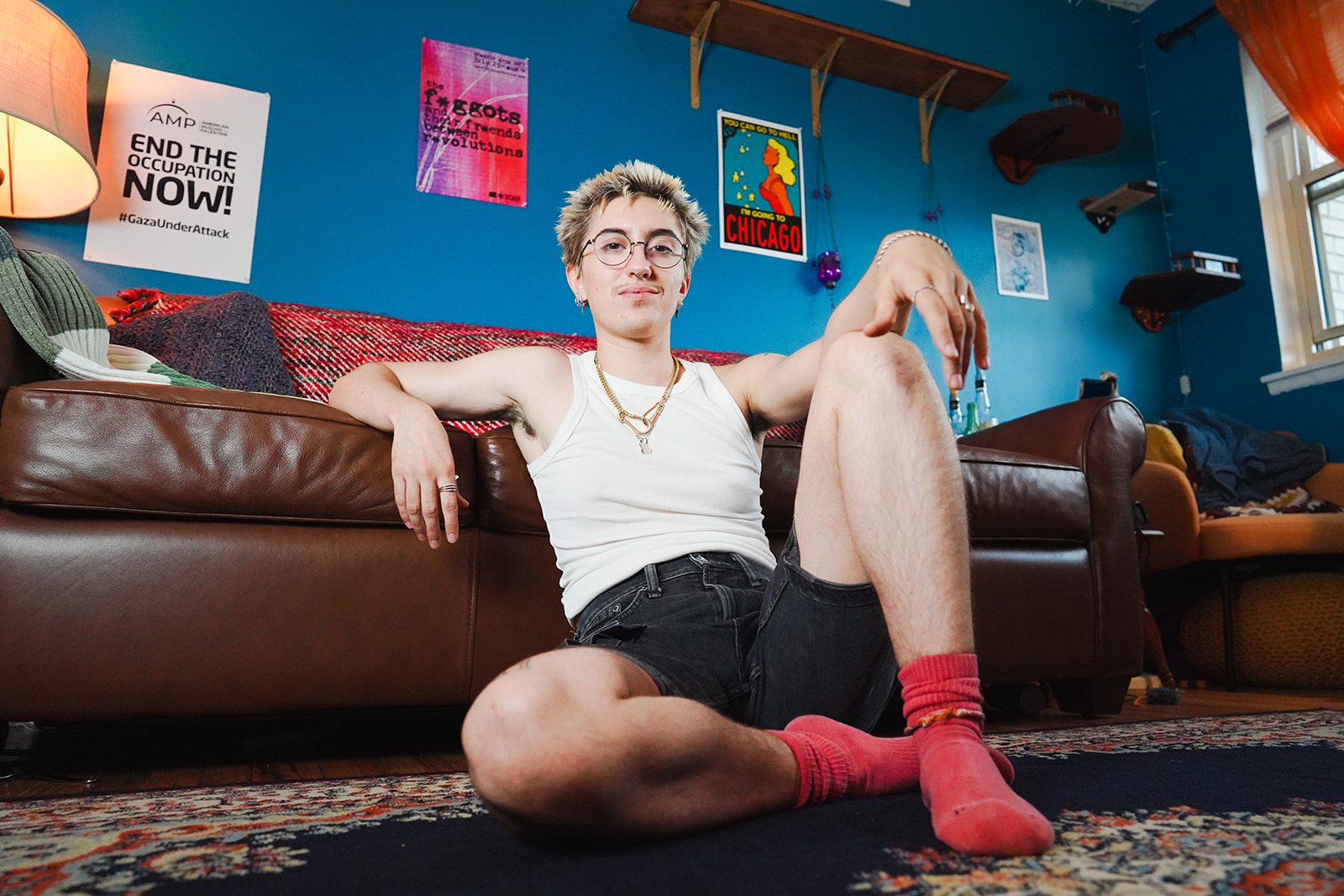
In what ways do you express or embody masculinity that differ from social expectations?
I am in a Butch-Femme relationship. It has done incredible things in helping me gain confidence in my identity and my love for Butchness.
I love to take care of my Femme, and she takes care of me. And yes, I do build her furniture and open the car door for her and buy her dresses, but this is not done as a result of some desire to feel like The Man or in control, it is done as a dedication to her and us and the love that queer people have sought out and been denied time and time again.
She is capable of anything, and she does more for me than anyone has before. We aren’t mimicking heterosexual love; we are both defying societal expectations because we do these actions without expectations of the other at all. It all shapes who I am and who we are. The way I express my Butchness and masculinity and the way I care for my Femme is not impacted by societal expectations, but it certainly impacts them.
What is the most unforgettable or impactful memory from your dating life?
There’s a lot I can say about my relationships and their impact on my understanding of self. My newly discovered lesbian identity in junior high was immediately built on a cracked foundation, as my first relationship with a woman in high school ended in me filing a protective order and winding up in year-long PTSD treatment. Relationships after this ebbed and flowed from sweet but inconsequential, to exciting but downright dangerous. This made finding the time and support to explore my masculine identity nearly impossible. Although I have always been the more masculine one in all my relationships, I do not believe that many people saw me for who I truly was until my current relationship. Of course, it was only a few months before I met my now-girlfriend that I really owned my Butch identity. This occurred the spring before, when I met a Butch for Butch couple, both on or having been on testosterone, and I was able to have these discussions with someone for the first time. My newly cemented identity was there, but someone who saw and desired it for what it was, was not.
Finally, I met the Femme of my dreams. We journey through these identities together. She picked up Stone Butch Blues, I picked up The Femme Mystique. We see each other for who we are and who we want to be.
What is one belief or assumption you held in the past that turned out to be wrong?
I think when I was younger, I was constrained by a limited mindset when it came to identity. I did not have the language or historical context to understand vast lesbian identities, and likely would have never pictured myself going on testosterone and still identifying as a lesbian. In fact, at my coming out age and the few years that followed, I may have even felt like I was lying to myself.
It is so easy to be the judge of how others identify and express themselves when you feel like your own identity is so cut and dry. Once I started to expand on my own expression, and especially when HRT was quickly approaching the table, all that judgement of others seemed absolutely pointless. I knew I was about to begin something that many people would never understand, likely not even my younger self. If I knew the risk I was taking with my identity, and that it only mattered what I thought of my own, then why would I participate in the policing of anyone else’s? It changed so much for me, physically and emotionally.
I hope that if I were ever face-to-face with my younger self, I could explain this to her. She was scared, and she did not understand others and herself. She fought tooth and nail to get to where she is now, and I have to believe that above it all, we would be so proud of each other.
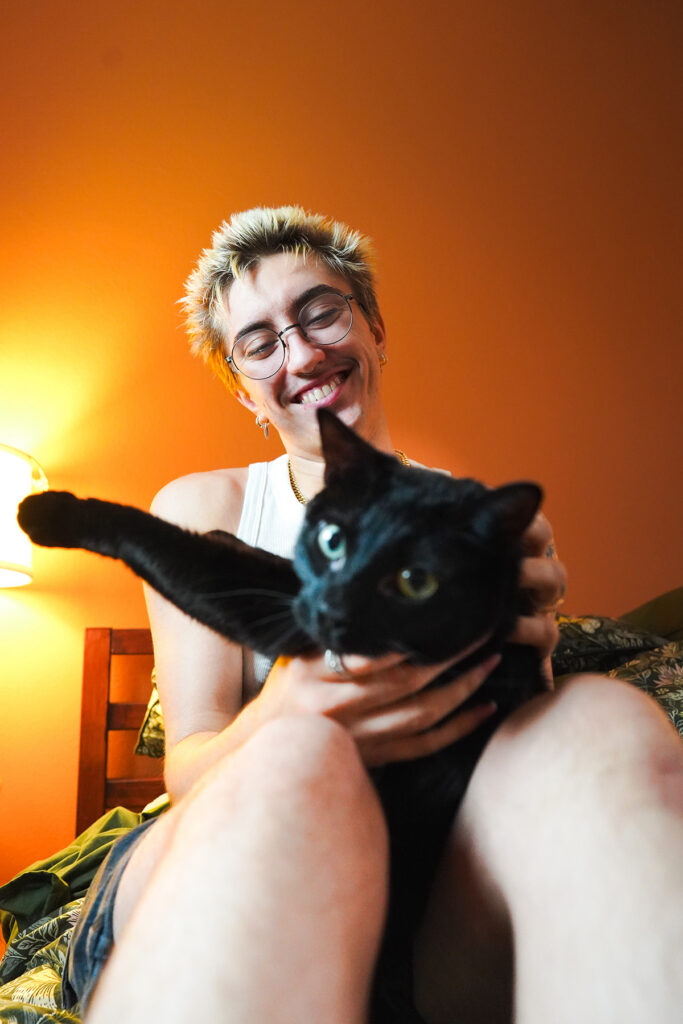
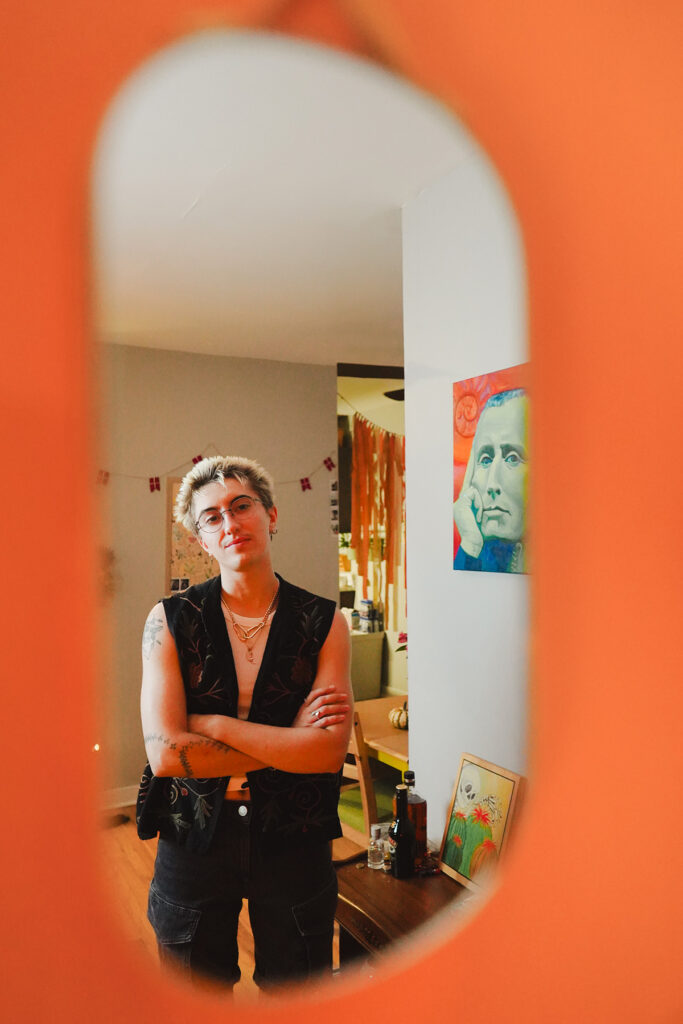
In what ways do you express or embody masculinity that differ from social expectations?
I am in a Butch-Femme relationship. It has done incredible things in helping me gain confidence in my identity and my love for Butchness.
I love to take care of my Femme, and she takes care of me. And yes, I do build her furniture and open the car door for her and buy her dresses, but this is not done as a result of some desire to feel like The Man or in control, it is done as a dedication to her and us and the love that queer people have sought out and been denied time and time again.
She is capable of anything, and she does more for me than anyone has before. We aren’t mimicking heterosexual love; we are both defying societal expectations because we do these actions without expectations of the other at all. It all shapes who I am and who we are. The way I express my Butchness and masculinity and the way I care for my Femme is not impacted by societal expectations, but it certainly impacts them.
What is the most unforgettable or impactful memory from your dating life?
There’s a lot I can say about my relationships and their impact on my understanding of self. My newly discovered lesbian identity in junior high was immediately built on a cracked foundation, as my first relationship with a woman in high school ended in me filing a protective order and winding up in year-long PTSD treatment. Relationships after this ebbed and flowed from sweet but inconsequential, to exciting but downright dangerous. This made finding the time and support to explore my masculine identity nearly impossible. Although I have always been the more masculine one in all my relationships, I do not believe that many people saw me for who I truly was until my current relationship. Of course, it was only a few months before I met my now-girlfriend that I really owned my Butch identity. This occurred the spring before, when I met a Butch for Butch couple, both on or having been on testosterone, and I was able to have these discussions with someone for the first time. My newly cemented identity was there, but someone who saw and desired it for what it was, was not.
Finally, I met the Femme of my dreams. We journey through these identities together. She picked up Stone Butch Blues, I picked up The Femme Mystique. We see each other for who we are and who we want to be.
What is one belief or assumption you held in the past that turned out to be wrong?
I think when I was younger, I was constrained by a limited mindset when it came to identity. I did not have the language or historical context to understand vast lesbian identities, and likely would have never pictured myself going on testosterone and still identifying as a lesbian. In fact, at my coming out age and the few years that followed, I may have even felt like I was lying to myself.
It is so easy to be the judge of how others identify and express themselves when you feel like your own identity is so cut and dry. Once I started to expand on my own expression, and especially when HRT was quickly approaching the table, all that judgement of others seemed absolutely pointless. I knew I was about to begin something that many people would never understand, likely not even my younger self. If I knew the risk I was taking with my identity, and that it only mattered what I thought of my own, then why would I participate in the policing of anyone else’s? It changed so much for me, physically and emotionally.
I hope that if I were ever face-to-face with my younger self, I could explain this to her. She was scared, and she did not understand others and herself. She fought tooth and nail to get to where she is now, and I have to believe that above it all, we would be so proud of each other.