Butch Whipsers: Shoshanna Rosenberg
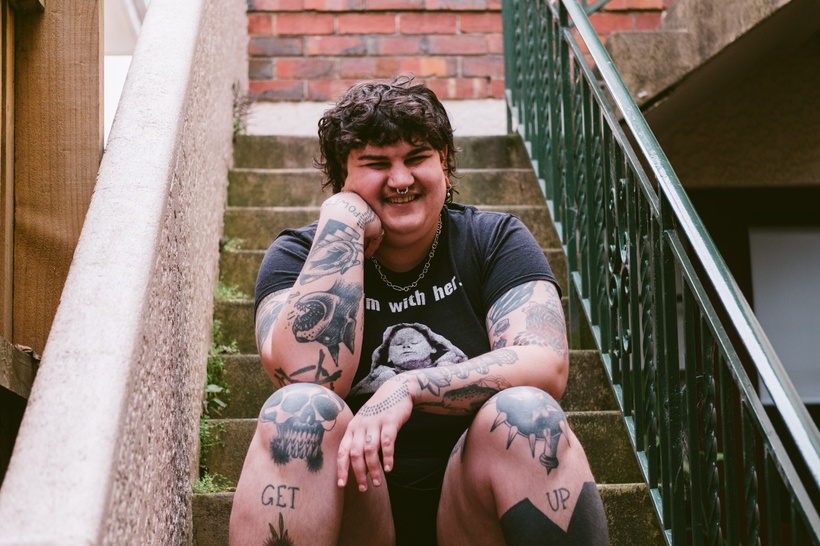
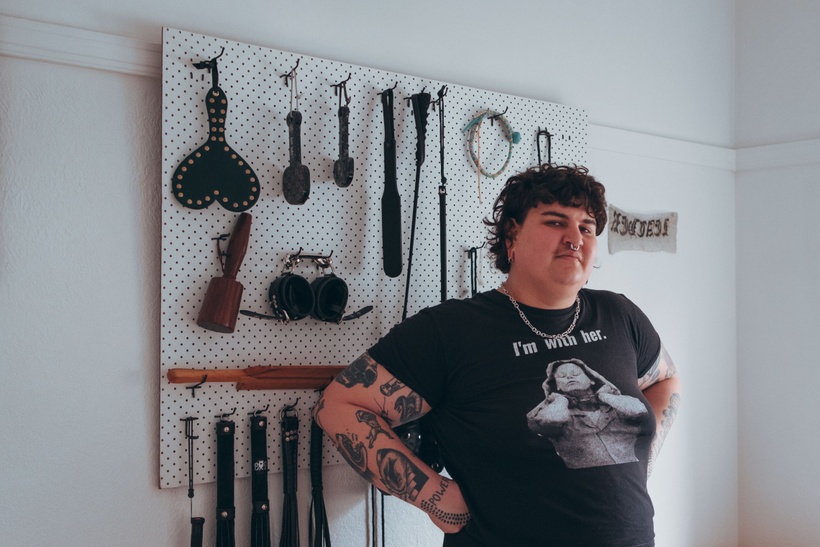
I currently live in Naarm/Melbourne in Victoria, Australia. I moved here just before the pandemic hit, in a highly idealistic career move, which sadly did not pay off due to the imminent lockdown and general shutdown of my industry. But you live and learn! I spend my time working as a backroom goblin in health research, specifically trans research. Outside of my work, I like to spend my time immersing myself in my culture (rewatching The Nanny and having perverted Leatherdyke sex)..
Tell us about a time when being butch positively impacted your life..
Uncovering my butchness and being able to understand my place within the history and culture of queerness has had a positive impact on my life as in and of itself. It has felt like tying so many loose threads from my personal history into an experience that just ‘made sense’ to me, which I think is something many queer people struggle to find. Being butch is relational, it is aesthetic, it is a means of becoming another link in the chain of our rich queer ancestry. It wasn’t until I found butchness that I understood how I am perceived in the world, what expectations and narratives play out in my relationships, and how my body and the ways I adorn it affect my mentality, my health, and my connection to the universe.
What is something about your butch identity you feel like no one understands?
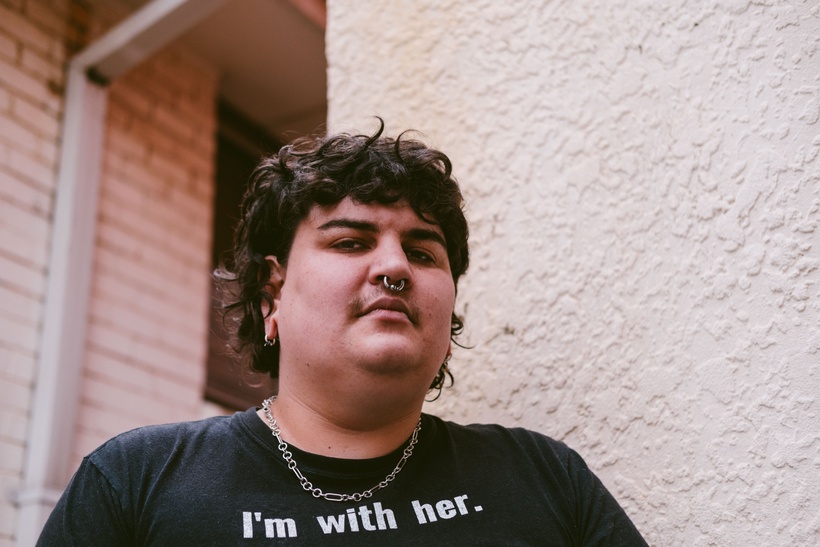
As a butch trans woman, one of the most consistent narratives I contend with is this notion that my butchness is some type of detransition. Recently, my mom sent my uncle a photo of me from my last big hair chop-off, and his response was “it looks like Shoshana has gone back to being Shoshan” (the male version of my name in Hebrew). This is a fairly constant refrain I see thrown around, and is certainly a conversation I have had to have several times. Ironically, this kind of feedback has only brought me closer to my butch identity; I’m part of a long line of women who have the kind of aesthetics and approach to the world that often compels straight people (and other queers!) to misgender them and place them into a male category against their will. Stone Butch Blues was definitely pivotal in helping me understand my position in the world, and how valuable it is to live through these problems and continue to thrive. I think the nexus of transness and butchness gives a fascinating insight into being ‘outside’ of practically any normative societal narrative and shows where the lines between gender, presentation, sexuality, and subculture belonging blur if not disappear entirely.

Tell us about a time when being butch positively impacted your life..
Uncovering my butchness and being able to understand my place within the history and culture of queerness has had a positive impact on my life as in and of itself. It has felt like tying so many loose threads from my personal history into an experience that just ‘made sense’ to me, which I think is something many queer people struggle to find. Being butch is relational, it is aesthetic, it is a means of becoming another link in the chain of our rich queer ancestry. It wasn’t until I found butchness that I understood how I am perceived in the world, what expectations and narratives play out in my relationships, and how my body and the ways I adorn it affect my mentality, my health, and my connection to the universe.
What is something about your butch identity you feel like no one understands?
As a butch trans woman, one of the most consistent narratives I contend with is this notion that my butchness is some type of detransition. Recently, my mom sent my uncle a photo of me from my last big hair chop-off, and his response was “it looks like Shoshana has gone back to being Shoshan” (the male version of my name in Hebrew). This is a fairly constant refrain I see thrown around, and is certainly a conversation I have had to have several times. Ironically, this kind of feedback has only brought me closer to my butch identity; I’m part of a long line of women who have the kind of aesthetics and approach to the world that often compels straight people (and other queers!) to misgender them and place them into a male category against their will. Stone Butch Blues was definitely pivotal in helping me understand my position in the world, and how valuable it is to live through these problems and continue to thrive. I think the nexus of transness and butchness gives a fascinating insight into being ‘outside’ of practically any normative societal narrative and shows where the lines between gender, presentation, sexuality, and subculture belonging blur if not disappear entirely.
As a butch trans woman, one of the most consistent narratives I contend with is this notion that my butchness is some type of detransition.
What is something on your bucket list that makes you blush?Few things make me blush, but I do hope to get a good few tongues competing for a spot on my leather boots at some point soon
What’s something in your life that’s gone unfulfilled that you’re still searching for?These days? Very little. If me from 10 years ago knew where I would find myself in terms of career, gender, sexuality, location… She would be ecstatic. And I try my best to remember the simplicity of those desires and to remind myself that I have in fact already arrived.
What has been the best thing that you’ve been wrong about in your life?
Realising I was in fact a lesbian, after crunching my way through several other letters in the alphabet soup.
How do you feel like you embody masculinity differently from what is expected of you?
When I think of butchness, I rarely consider ideas of masculine/feminine, and prefer to focus on the inner workings of being a butch. My butchness is not masculine, nor is it a feminine way of emulating some kind of masculine maleness. Rather, it is about a style, a set of ideas of how to regard others, and finding ways to connect with my body and spirit. I would say that in many ways any perceived masculinity I embody is subverted by my upbringing, which I would say was equal parts oppressively patriarchal from my dad’s side and verging on genderfuckery from my mom’s side. As a result I have not had access to many of the ‘traditional’ life experiences which form common narratives of butchness e.g. being a tomboy, having lots of male friends growing up, and engaging with supposedly masculine activities such as sports. I was a faggot long before I realized I was a dyke, and that position continues to keep me separate from any easy narratives of masculinity, adjacency to maleness etc.
What’s your spiritual understanding of masculinity?
I think G-d made us all as individual fragments which, when put together, create a complete-though-ever-shifting image of the Divine. “Masculinity”, or the things that we have come to define as such, is an inevitable aspect of that larger picture. Whether you take masculinity to mean ‘opposite to femininity’ or more as a catchall phrase that encompasses certain clusters of behaviors, aesthetics, and relationships, I think it has an important role to play and can offer a fascinating lens on human existence. However, I reject notions such as the ‘divine feminine/masculine’, particularly when it comes to any explanation of G-d as a system or structure. G-d is no more feminine than they are masculine, in the same way, G-d is no more white than they are Bla(c)k. Anyone who wants to tell you that there are two fundamental complementary components which, when put together, create one whole legible Divine experience is selling snake oil.
In the same way that we have yet to make gold out of shit, we have yet to unite The Feminine and The Masculine in ways that have legitimately brought the Divine into the material realm. Rather, it is about our individual connections to Divinity and whether we can combine these collectively to creative Divinity on Earth, as opposed to simply pairing off and recreating these unnecessary binaries
What do you believe the evolutionary purpose of gender-diversity in humans is?
I personally reject any attempts to use evolution as a means of justifying queer existence. If evolution was a perfect or even fully comprehensible process in any way we would not have organs which can just fail or have the pipe that gives us oxygen be the same one we have to regularly block in order to provide ourselves with nutrition. “Adam & Eve” types will never be persuaded by evolutionary arguments in the same way most of them cannot be persuaded using contemporary queer-affirming scriptural interpretations. Their ignorance is wilful and borne of a culture of fear, rigid individualism, and detachment from the world at large. All you can do is hope they each experience an ego death so profound that they might come to understand that they are just as flawed and fucked up as us sinners.
Has there been a memory, moment, or time in your life where being butch made your experience particularly difficult?
The hardest times in my life in terms of butchness are always situations where my butchness gets misread (willfully or otherwise) as maleness, as laziness, or as being in some ways or another illegible and undigestible within broader queer narratives. This has been particularly hard when I’ve been in relationships with people who did not have the same proximity to my understanding of myself, which has often wound me up playing some kind of male role in a relationship (whether it’s a dad, a boyfriend, a husband…) There are of course interplaying issues within these, especially when a relationship goes sour due to my inability and unwillingness to live up to those male standards. When a partner decides that your butchness makes your indefatigable, tough, unemotional, or incapable of being sensitive or upset, there is little room for legitimate mutual growth or understanding. I’m lucky to be in a place right now where this is not the case, but my 20+ years of dating as the difficult-to-understand person that I am have shown me that these troubles are much easier to fall into than you might expect
Are there parts of your inherit masculinity you’ve ever felt like you had to work to unlearn?
I grew up in occupied Palestine a.k.a IsraHell. This meant growing up surrounded by mass political violence, apartheid, oppressive anti-woman and anti-gay legislation, and a society which placed masculinity on such a high pedestal that we have our own term coined for it: Muscular Judaism. As someone who was raised as a boy, I was not only a victim to the mindsets which perpetuated these types of violence but was pushed to actively reproduce and enact these harmful thought patterns and behaviors. I moved to the Colony when I was 13, a place with its own history of genocide and destruction of people in the name of (white) masculinity. Thankfully the culture shock of Australian masculinity, though a very different flavour of masculinity to what I had grown up with, showed me exactly what I wanted to avoid. I was already detached from these toxic conceptions of masculinity, but being a faggy immigrant ensured that I was met with so much masculinity-induced violence that I had no choice but to depart. It’s a lifelong process of undoing, and by no means do I think my work is done, but I think in accepting my status as outsider and understanding the political importance of that position has been vital in guiding me towards relating to others’ and to myself outside the scope of the male gaze, patriarchy, and their interconnected acts of systemic and interpersonal violence.
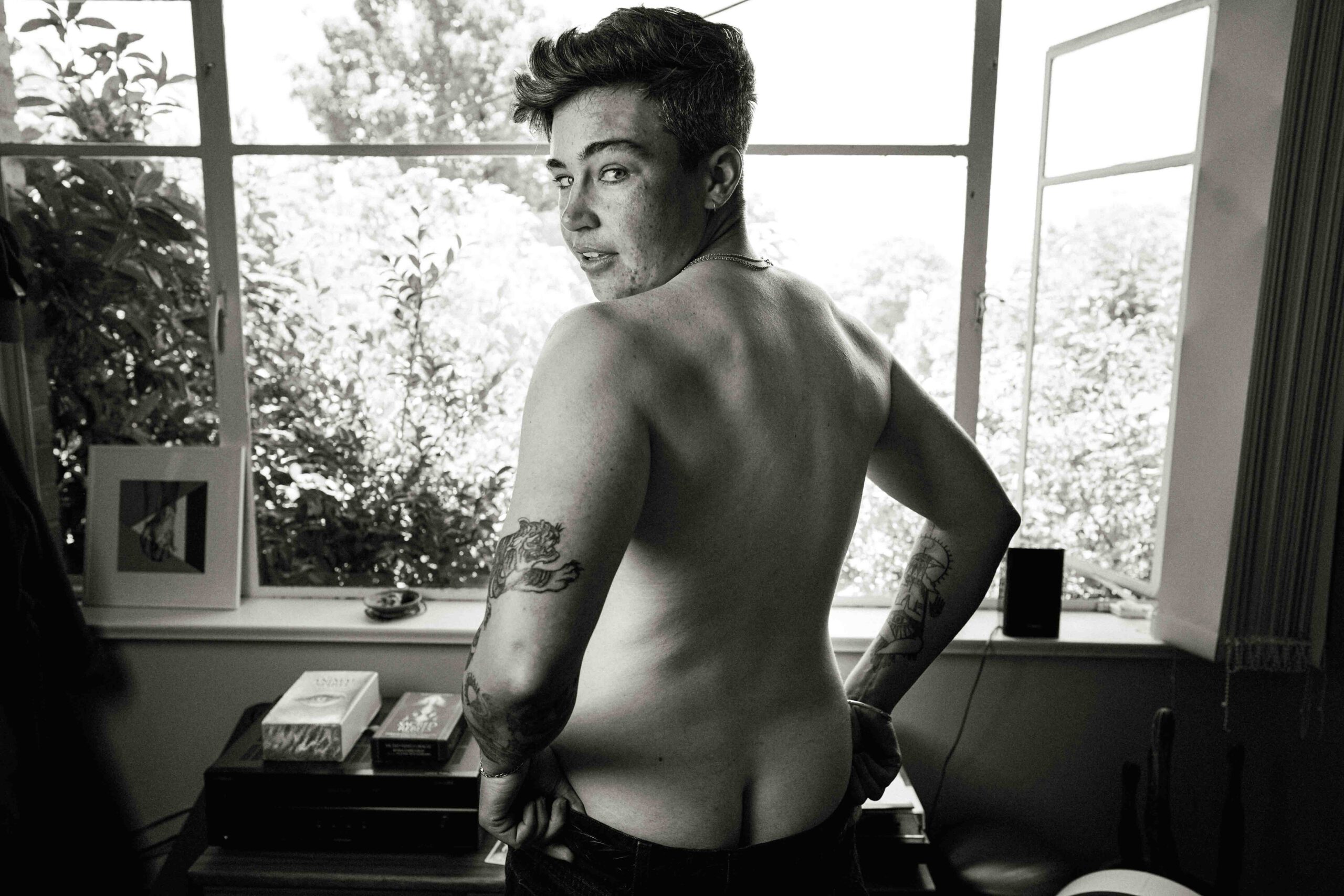
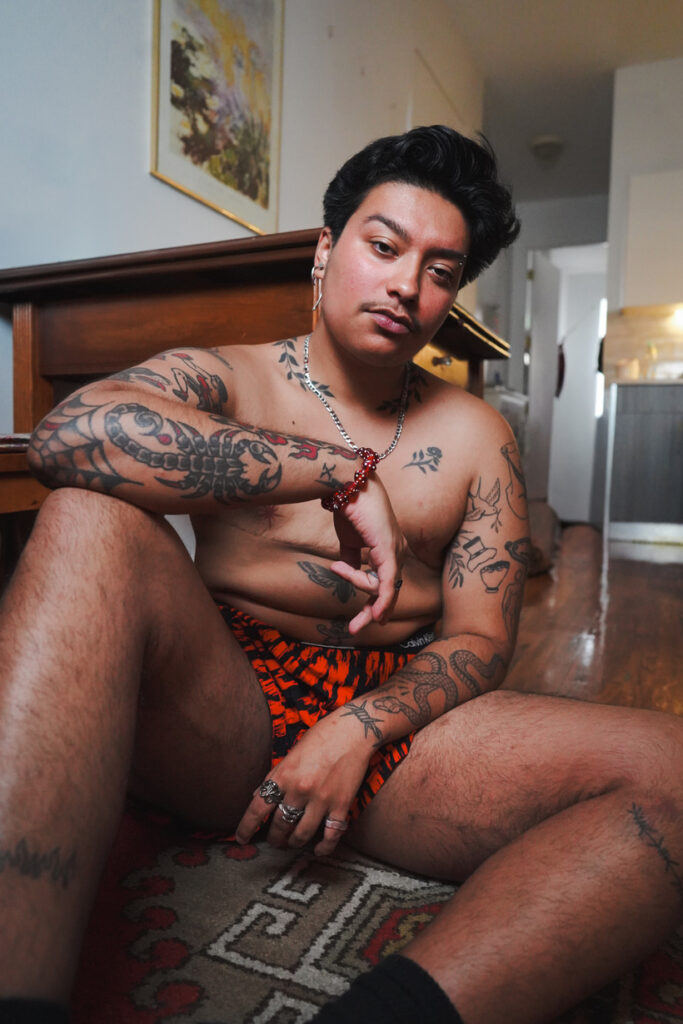
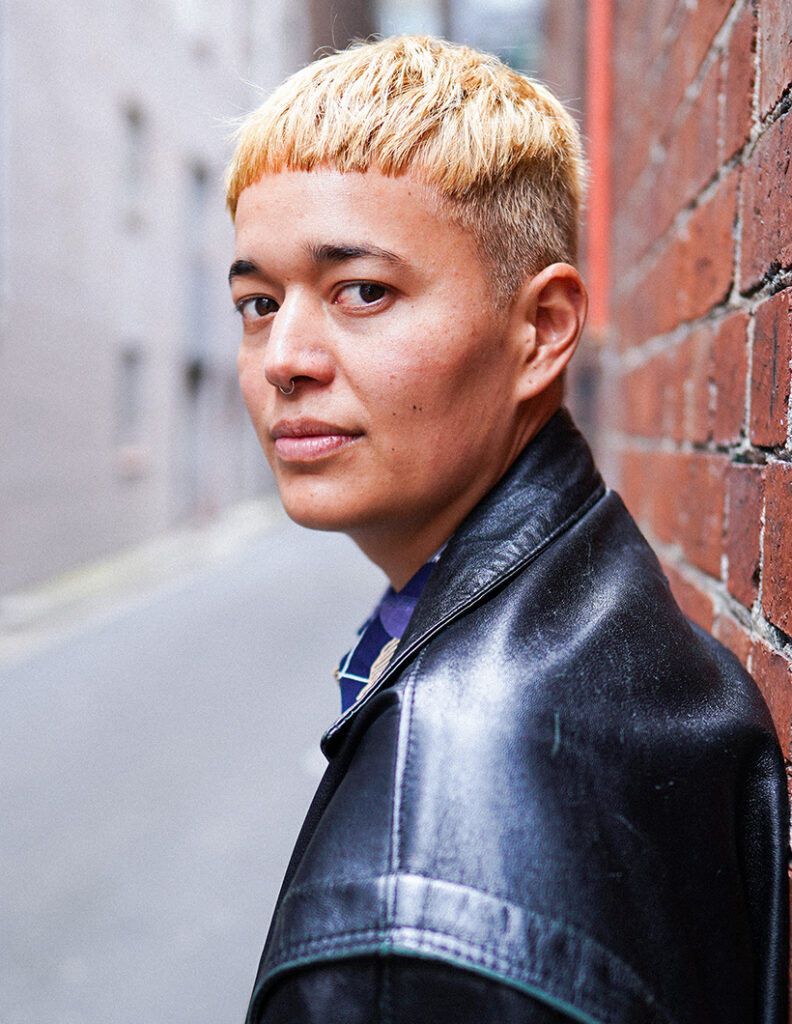
@kneidellover | Photos by Francesca Donnolli
What is something on your bucket list that makes you blush?Few things make me blush, but I do hope to get a good few tongues competing for a spot on my leather boots at some point soon
What’s something in your life that’s gone unfulfilled that you’re still searching for?These days? Very little. If me from 10 years ago knew where I would find myself in terms of career, gender, sexuality, location… She would be ecstatic. And I try my best to remember the simplicity of those desires and to remind myself that I have in fact already arrived.
What has been the best thing that you’ve been wrong about in your life?
Realising I was in fact a lesbian, after crunching my way through several other letters in the alphabet soup.
How do you feel like you embody masculinity differently from what is expected of you?
When I think of butchness, I rarely consider ideas of masculine/feminine, and prefer to focus on the inner workings of being a butch. My butchness is not masculine, nor is it a feminine way of emulating some kind of masculine maleness. Rather, it is about a style, a set of ideas of how to regard others, and finding ways to connect with my body and spirit. I would say that in many ways any perceived masculinity I embody is subverted by my upbringing, which I would say was equal parts oppressively patriarchal from my dad’s side and verging on genderfuckery from my mom’s side. As a result I have not had access to many of the ‘traditional’ life experiences which form common narratives of butchness e.g. being a tomboy, having lots of male friends growing up, and engaging with supposedly masculine activities such as sports. I was a faggot long before I realized I was a dyke, and that position continues to keep me separate from any easy narratives of masculinity, adjacency to maleness etc.
What’s your spiritual understanding of masculinity?
I think G-d made us all as individual fragments which, when put together, create a complete-though-ever-shifting image of the Divine. “Masculinity”, or the things that we have come to define as such, is an inevitable aspect of that larger picture. Whether you take masculinity to mean ‘opposite to femininity’ or more as a catchall phrase that encompasses certain clusters of behaviors, aesthetics, and relationships, I think it has an important role to play and can offer a fascinating lens on human existence. However, I reject notions such as the ‘divine feminine/masculine’, particularly when it comes to any explanation of G-d as a system or structure. G-d is no more feminine than they are masculine, in the same way, G-d is no more white than they are Bla(c)k. Anyone who wants to tell you that there are two fundamental complementary components which, when put together, create one whole legible Divine experience is selling snake oil.
In the same way that we have yet to make gold out of shit, we have yet to unite The Feminine and The Masculine in ways that have legitimately brought the Divine into the material realm. Rather, it is about our individual connections to Divinity and whether we can combine these collectively to creative Divinity on Earth, as opposed to simply pairing off and recreating these unnecessary binaries
What do you believe the evolutionary purpose of gender-diversity in humans is?
I personally reject any attempts to use evolution as a means of justifying queer existence. If evolution was a perfect or even fully comprehensible process in any way we would not have organs which can just fail or have the pipe that gives us oxygen be the same one we have to regularly block in order to provide ourselves with nutrition. “Adam & Eve” types will never be persuaded by evolutionary arguments in the same way most of them cannot be persuaded using contemporary queer-affirming scriptural interpretations. Their ignorance is wilful and borne of a culture of fear, rigid individualism, and detachment from the world at large. All you can do is hope they each experience an ego death so profound that they might come to understand that they are just as flawed and fucked up as us sinners.
Has there been a memory, moment, or time in your life where being butch made your experience particularly difficult?
The hardest times in my life in terms of butchness are always situations where my butchness gets misread (willfully or otherwise) as maleness, as laziness, or as being in some ways or another illegible and undigestible within broader queer narratives. This has been particularly hard when I’ve been in relationships with people who did not have the same proximity to my understanding of myself, which has often wound me up playing some kind of male role in a relationship (whether it’s a dad, a boyfriend, a husband…) There are of course interplaying issues within these, especially when a relationship goes sour due to my inability and unwillingness to live up to those male standards. When a partner decides that your butchness makes your indefatigable, tough, unemotional, or incapable of being sensitive or upset, there is little room for legitimate mutual growth or understanding. I’m lucky to be in a place right now where this is not the case, but my 20+ years of dating as the difficult-to-understand person that I am have shown me that these troubles are much easier to fall into than you might expect
Are there parts of your inherit masculinity you’ve ever felt like you had to work to unlearn?
I grew up in occupied Palestine a.k.a IsraHell. This meant growing up surrounded by mass political violence, apartheid, oppressive anti-woman and anti-gay legislation, and a society which placed masculinity on such a high pedestal that we have our own term coined for it: Muscular Judaism. As someone who was raised as a boy, I was not only a victim to the mindsets which perpetuated these types of violence but was pushed to actively reproduce and enact these harmful thought patterns and behaviors. I moved to the Colony when I was 13, a place with its own history of genocide and destruction of people in the name of (white) masculinity. Thankfully the culture shock of Australian masculinity, though a very different flavour of masculinity to what I had grown up with, showed me exactly what I wanted to avoid. I was already detached from these toxic conceptions of masculinity, but being a faggy immigrant ensured that I was met with so much masculinity-induced violence that I had no choice but to depart. It’s a lifelong process of undoing, and by no means do I think my work is done, but I think in accepting my status as outsider and understanding the political importance of that position has been vital in guiding me towards relating to others’ and to myself outside the scope of the male gaze, patriarchy, and their interconnected acts of systemic and interpersonal violence.
@kneidellover | Photos by Francesca Donnolli