Butch Whispers: Corey Wellik
I was born in Salt Lake City but raised mostly in Ann Arbor, Michigan, by socially conservative Catholic parents who had left their small-town roots behind. Queerness was taboo in my family—the only queer person I ever heard of was a second cousin I was never allowed to meet. After her early death, my family blamed her girlfriend, fueled by nothing but homophobia.
My parents, shaped by fear and survival, believed success came from fitting into societal expectations. I learned early that to stay safe, I had to become someone who soothed their struggles and mirrored what the world deemed acceptable. Though I was a naturally tomboyish kid—often mistaken for a boy—my mother quickly intervened, teaching me to perform femininity with razors, makeup, and training bras. Bullying at school for being gender nonconforming only reinforced the message: safety meant suppressing my true self. My childhood was defined by learning to unlearn who I was. The further I could distance myself from my own desires, the safer I made the world around me.
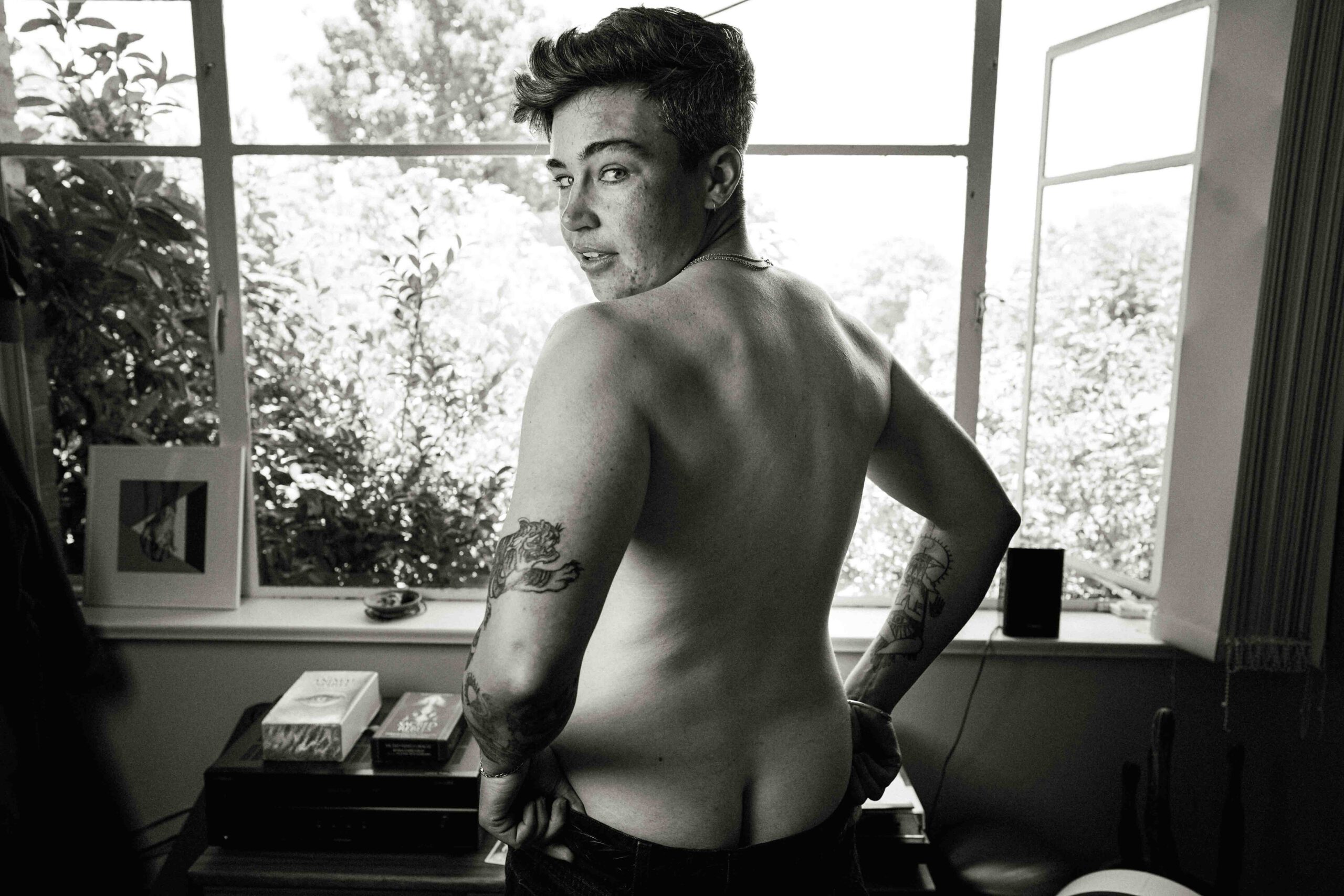
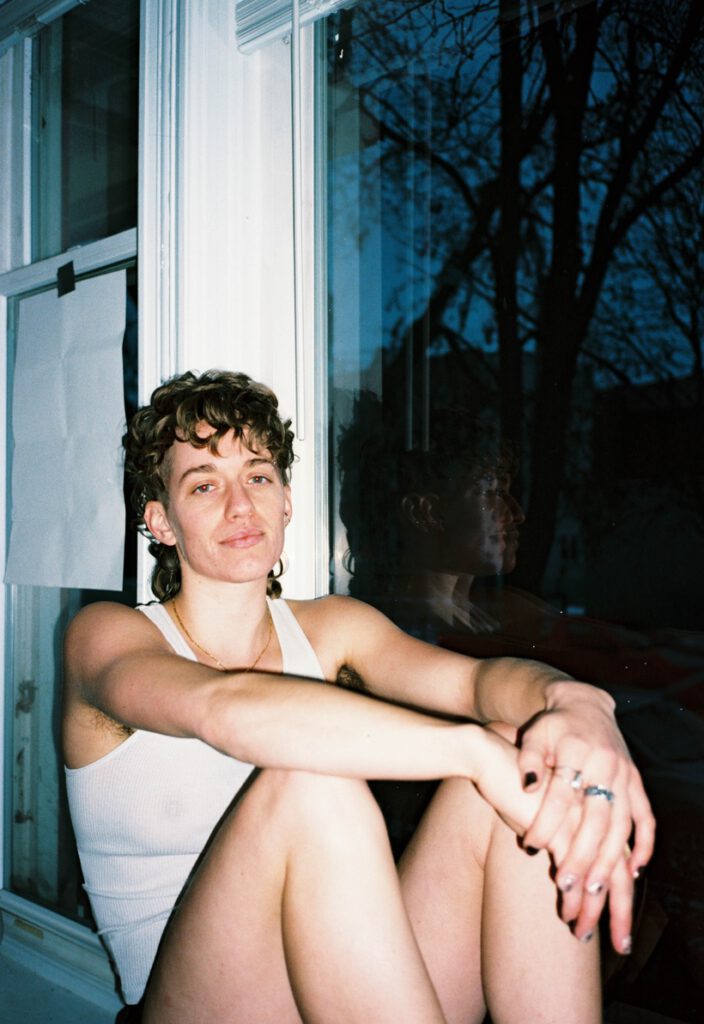
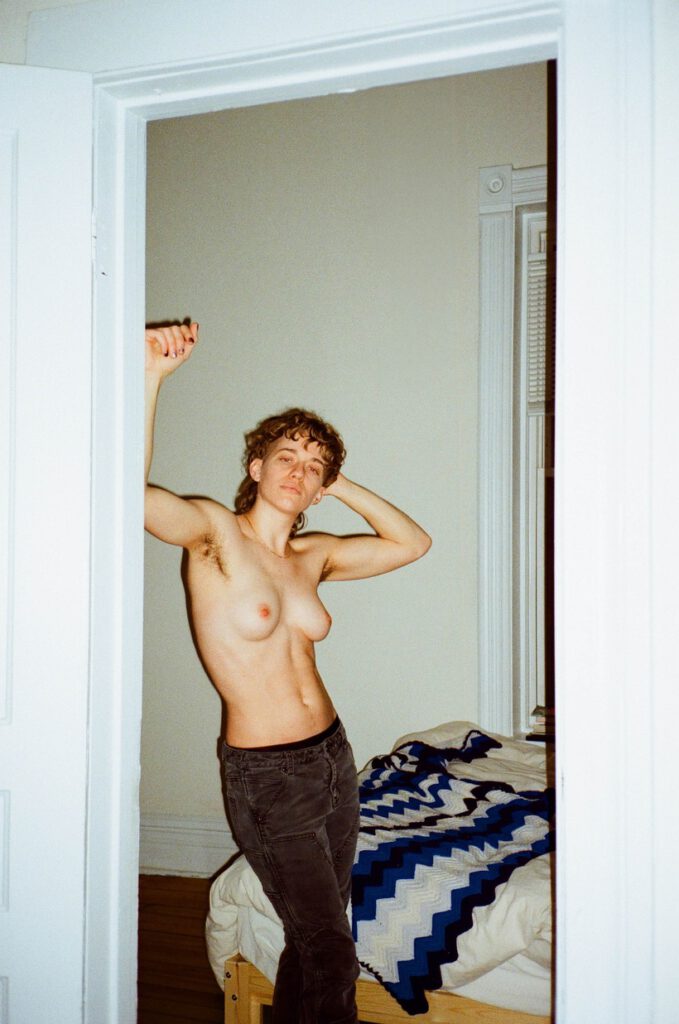
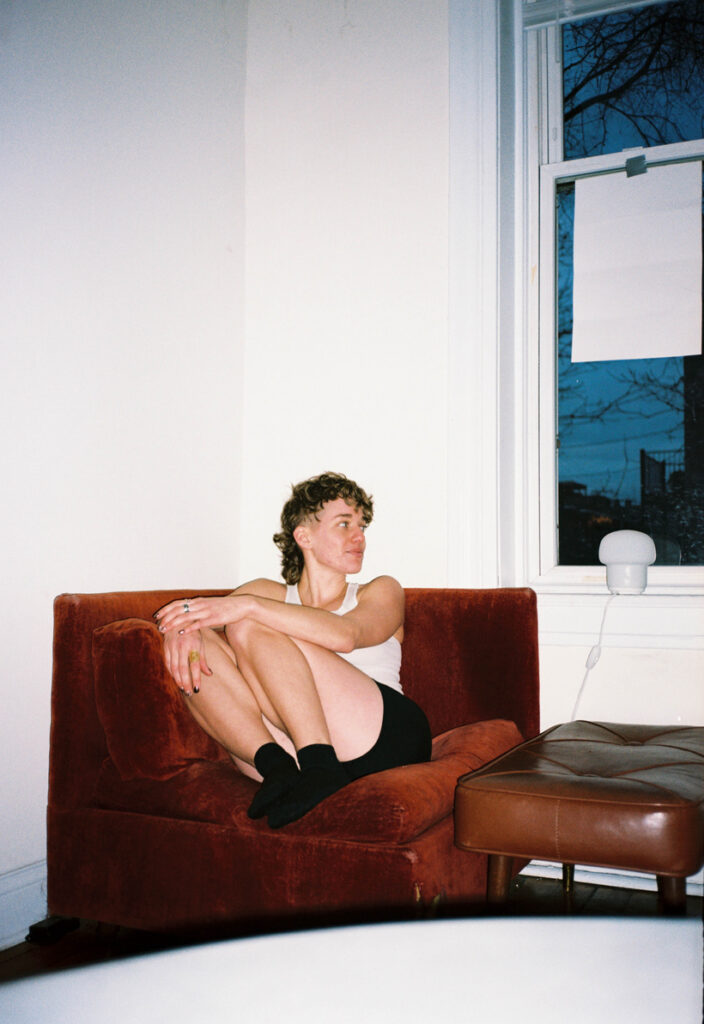
I first dipped a toe into my butchness in my early 20s. I bought my first button-down shirt and tried it on for myself in my dimly lit bedroom. My broad shoulders filled out the stiff fabric, my large hands looked at home fastening each button, and the way it fell forward off my chest accentuated my lack of curves into pleasingly bold lines. My body that had forever disappointed in feminine clothing, never performing quite right in skirts and tight tops, was suddenly an asset. For the first time, my body wasn’t “wrong” for the occasion, my body was not getting in the way of what I was wanting it to do. I learned in that moment what it was like to feel at home in my body. Instead of something I attempted to hide or alter, my body, just as it was, became something I appreciated, something I felt proud of, something that fit. Coming into my butchness taught me that authentic self-expression could, in fact, be safe. More than that, it could be pleasurable. Around the same time that I developed this trust to authentically express my gender, I also began to grow into the realization that I was an artist. My neighbor had enlisted me to help with woodworking and my hands felt purposeful and strong in the act of building with wood. My “butch body” was useful and effective, finding its home in the loving labor of craft. Woodworking became the path in which I found happiness and pride in giving my body unburdened allowance to be itself. The masculinity of my body moves with beautiful grace in the demanding and tedious task of carving wood. The more I grow into my masculinity, and therefore my femininity, the more my creativity flows freely. I am now pursuing my Master of Fine Arts in Woodworking at the University of Wisconsin, Madison, developing my craft, growing more and more into my self-expression.
Can you recall the first time you heard the word ‘butch‘ ?
I heard the word butch growing up used to either describe macho men, or to describe “ugly, manly” women. I don’t remember the exact moments, but I remember the deep painful pang in my stomach when I would hear it, without clarity on why I would feel it.
I’m sure I saw butches throughout my early life that drew my attention, but the most memorable and impactful moment of first truly seeing a butch was not until I was a late teen. I remember encountering a butch barista when I was 18 and feeling absolutely overcome by what I’ll call the “butch gaze.” The power that emanated from that butch’s gaze washed over me when our eyes locked. It was so palpable. I remember wanting to lean into that power, so full of deep care and attentiveness.
I was overcome with intense feelings realizing someone could become that deeply themselves, how uniquely powerful it was to encounter someone who was that true to their own spirit. I also remember it resulting in a strong urge to grow into my own power, whatever it became. I wanted to know what holding that power was like.
What is the most defining or transformative experience you’ve had in connection to your butchness?
I realized in my early twenties that my femininity I had expressed my whole life had been a scratchy, ill-fitting, uncomfortable costume. I had been putting on a show for the pleasure and acceptance of those around me. This felt especially palpable sexually, where I learned to create pleasure for others through putting on a performance of feminine pleasure. I didn’t dislike this, in fact, I loved and continue to love attentive focus on the pleasure of my partners.
I couldn’t believe others when they expressed desire to focus on my pleasure, because I couldn’t believe this fake self deserved that desire. Once I began my process of donning butchness, I finally started to feel a true and honest expression of my self to the world. The presentation of my gender and identity felt authentic for the first time in my life. I abandoned the sexual performance of pleasure and I became almost stone butch; I identified as a top and focused completely on pleasuring my partners, avoiding attempts at directing attention to my body, developing deep discomfort with any expression of my own pleasure vocally or otherwise during sex. Without the performance of pleasure, I felt there was nothing left to express. I felt broken.
But, as I leaned into my butchness and my masculinity, and allowed it to be a safe shape my self expression could flourish into, something surprising happened. My femininity came closer and closer to the surface. But, this time, it was organic, it was my true self. Masculinity became a vessel for my femininity to flow through. Masculinity showed me just how feminine I am. With this newfound balance, I began to desire focus on my own pleasure for the first time in my life. I could feel when people desired me, I could feel when people touched me, and I wanted it more and more. My capacity for pleasure was awakened. I found my true self and my body was free.
How do you define butchphobia?
I experience butchphobia every single day of my life. As a child, I was told my “boyish” expressions were ugly, undesirable, and would leave me isolated and forgotten. I was bullied for my androgyny. Now, I walk into bathrooms and receive intense stares and shocked faces, sometimes being followed in to be told I “went through the wrong door.” I stroll in my neighborhood and men yell “dyke” at me. I walk across the street and fraternity bros yell “fag” at me. I pick up food for my nibbling and the teenage boys in the parking lot ask if I eat pussy. Gay men grope me, misogyny giving permission to access my body that draws attention with its refusal to conform. Closeted women spank me on dance floors, corner me in drunken desperation, dump a lifetime of locked away desires on me, a safe vessel for their repression. Butchphobia, to me, feels like encountering those whose discomfort, fear, and often their own suppression, flare when confronted by their inability to place me into a tidy, familiar box. I challenge their precariously created assumptions of the world and their place in it.
Can you recall the first time you heard the word ‘butch‘ ?
I heard the word butch growing up used to either describe macho men, or to describe “ugly, manly” women. I don’t remember the exact moments, but I remember the deep painful pang in my stomach when I would hear it, without clarity on why I would feel it.
I’m sure I saw butches throughout my early life that drew my attention, but the most memorable and impactful moment of first truly seeing a butch was not until I was a late teen. I remember encountering a butch barista when I was 18 and feeling absolutely overcome by what I’ll call the “butch gaze.” The power that emanated from that butch’s gaze washed over me when our eyes locked. It was so palpable. I remember wanting to lean into that power, so full of deep care and attentiveness.
I was overcome with intense feelings realizing someone could become that deeply themselves, how uniquely powerful it was to encounter someone who was that true to their own spirit. I also remember it resulting in a strong urge to grow into my own power, whatever it became. I wanted to know what holding that power was like.
What is the most defining or transformative experience you’ve had in connection to your butchness?
I realized in my early twenties that my femininity I had expressed my whole life had been a scratchy, ill-fitting, uncomfortable costume. I had been putting on a show for the pleasure and acceptance of those around me. This felt especially palpable sexually, where I learned to create pleasure for others through putting on a performance of feminine pleasure. I didn’t dislike this, in fact, I loved and continue to love attentive focus on the pleasure of my partners.
I couldn’t believe others when they expressed desire to focus on my pleasure, because I couldn’t believe this fake self deserved that desire. Once I began my process of donning butchness, I finally started to feel a true and honest expression of my self to the world. The presentation of my gender and identity felt authentic for the first time in my life. I abandoned the sexual performance of pleasure and I became almost stone butch; I identified as a top and focused completely on pleasuring my partners, avoiding attempts at directing attention to my body, developing deep discomfort with any expression of my own pleasure vocally or otherwise during sex. Without the performance of pleasure, I felt there was nothing left to express. I felt broken.
But, as I leaned into my butchness and my masculinity, and allowed it to be a safe shape my self expression could flourish into, something surprising happened. My femininity came closer and closer to the surface. But, this time, it was organic, it was my true self. Masculinity became a vessel for my femininity to flow through. Masculinity showed me just how feminine I am. With this newfound balance, I began to desire focus on my own pleasure for the first time in my life. I could feel when people desired me, I could feel when people touched me, and I wanted it more and more. My capacity for pleasure was awakened. I found my true self and my body was free.
How do you define butchphobia?
I experience butchphobia every single day of my life. As a child, I was told my “boyish” expressions were ugly, undesirable, and would leave me isolated and forgotten. I was bullied for my androgyny. Now, I walk into bathrooms and receive intense stares and shocked faces, sometimes being followed in to be told I “went through the wrong door.” I stroll in my neighborhood and men yell “dyke” at me. I walk across the street and fraternity bros yell “fag” at me. I pick up food for my nibbling and the teenage boys in the parking lot ask if I eat pussy. Gay men grope me, misogyny giving permission to access my body that draws attention with its refusal to conform. Closeted women spank me on dance floors, corner me in drunken desperation, dump a lifetime of locked away desires on me, a safe vessel for their repression. Butchphobia, to me, feels like encountering those whose discomfort, fear, and often their own suppression, flare when confronted by their inability to place me into a tidy, familiar box. I challenge their precariously created assumptions of the world and their place in it.
But I realized the pleasure I derived was never direct because this costume, this disconnection from my true self, made me deeply uncomfortable when there was attempt to focus on my own pleasure; I felt nothing when I was being touched.

Is there something about your butch identity that you feel is often misunderstood or overlooked by others?
I find that people, even those in my queer community, often express emotions ranging from shock to disapproval to ridicule, when I express my femininity. Because I am butch, because I am masculine in my gender expression, I am often met with expectations of expressing my masculinity how straight, cis men who are infested with toxic-masculinity do. And, I often do not. My favorite color is pink, I am flamboyant in my self-expression, I love to dance and paint nails and garden and bake. Fully realizing my masculine spirit has been vital to fully realizing my feminine spirit. I am not fully myself when one is without the other. I wish people understood that butch does not mean misogynistic distancing from femininity, but instead revolutionary acceptance of the feminine inherent to the masculine.
Is there something about your butch identity that you feel is often misunderstood or overlooked by others?
I find that people, even those in my queer community, often express emotions ranging from shock to disapproval to ridicule, when I express my femininity. Because I am butch, because I am masculine in my gender expression, I am often met with expectations of expressing my masculinity how straight, cis men who are infested with toxic-masculinity do. And, I often do not. My favorite color is pink, I am flamboyant in my self-expression, I love to dance and paint nails and garden and bake. Fully realizing my masculine spirit has been vital to fully realizing my feminine spirit. I am not fully myself when one is without the other. I wish people understood that butch does not mean misogynistic distancing from femininity, but instead revolutionary acceptance of the feminine inherent to the masculine.
Have there been aspects of your inherited masculinity that you felt compelled to unlearn?
When I first inherited masculinity, I struggled through a phase of toxic-masculinity and developed a deep understanding of the violent insecurity that racks many men. I was insecure about my size, I was insecure about my femininity, I was insecure about expressing mys pleasure, I was insecure about how I was being perceived. I went through a journey of realizing that inheriting masculinity did not have to mean inheriting the toxic performance of masculinity that attempts to derive dominating power through a desperately misogynistic distancing from femininity.
Is there something about your butch identity that you feel is often misunderstood or overlooked by others?
I find that people, even those in my queer community, often express emotions ranging from shock to disapproval to ridicule, when I express my femininity. Because I am butch, because I am masculine in my gender expression, I am often met with expectations of expressing my masculinity how straight, cis men who are infested with toxic-masculinity do. And, I often do not. My favorite color is pink, I am flamboyant in my self-expression, I love to dance and paint nails and garden and bake. Fully realizing my masculine spirit has been vital to fully realizing my feminine spirit. I am not fully myself when one is without the other. I wish people understood that butch does not mean misogynistic distancing from femininity, but instead revolutionary acceptance of the feminine inherent to the masculine.
Is there something about your butch identity that you feel is often misunderstood or overlooked by others?
I find that people, even those in my queer community, often express emotions ranging from shock to disapproval to ridicule, when I express my femininity. Because I am butch, because I am masculine in my gender expression, I am often met with expectations of expressing my masculinity how straight, cis men who are infested with toxic-masculinity do. And, I often do not. My favorite color is pink, I am flamboyant in my self-expression, I love to dance and paint nails and garden and bake. Fully realizing my masculine spirit has been vital to fully realizing my feminine spirit. I am not fully myself when one is without the other. I wish people understood that butch does not mean misogynistic distancing from femininity, but instead revolutionary acceptance of the feminine inherent to the masculine.
Have there been aspects of your inherited masculinity that you felt compelled to unlearn?
When I first inherited masculinity, I struggled through a phase of toxic-masculinity and developed a deep understanding of the violent insecurity that racks many men. I was insecure about my size, I was insecure about my femininity, I was insecure about expressing mys pleasure, I was insecure about how I was being perceived. I went through a journey of realizing that inheriting masculinity did not have to mean inheriting the toxic performance of masculinity that attempts to derive dominating power through a desperately misogynistic distancing from femininity.