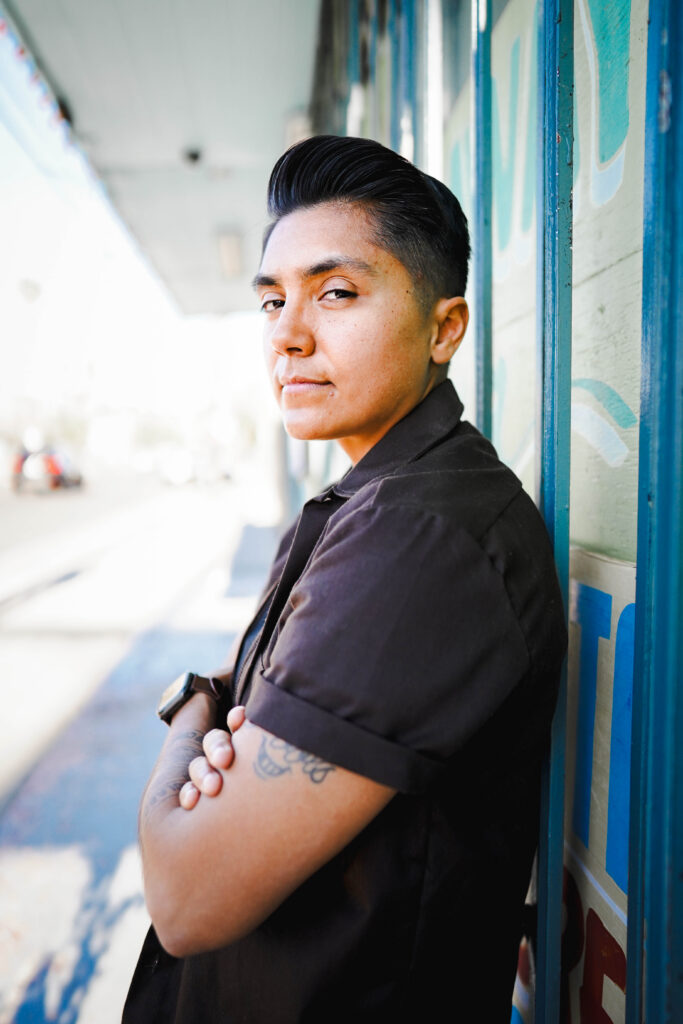
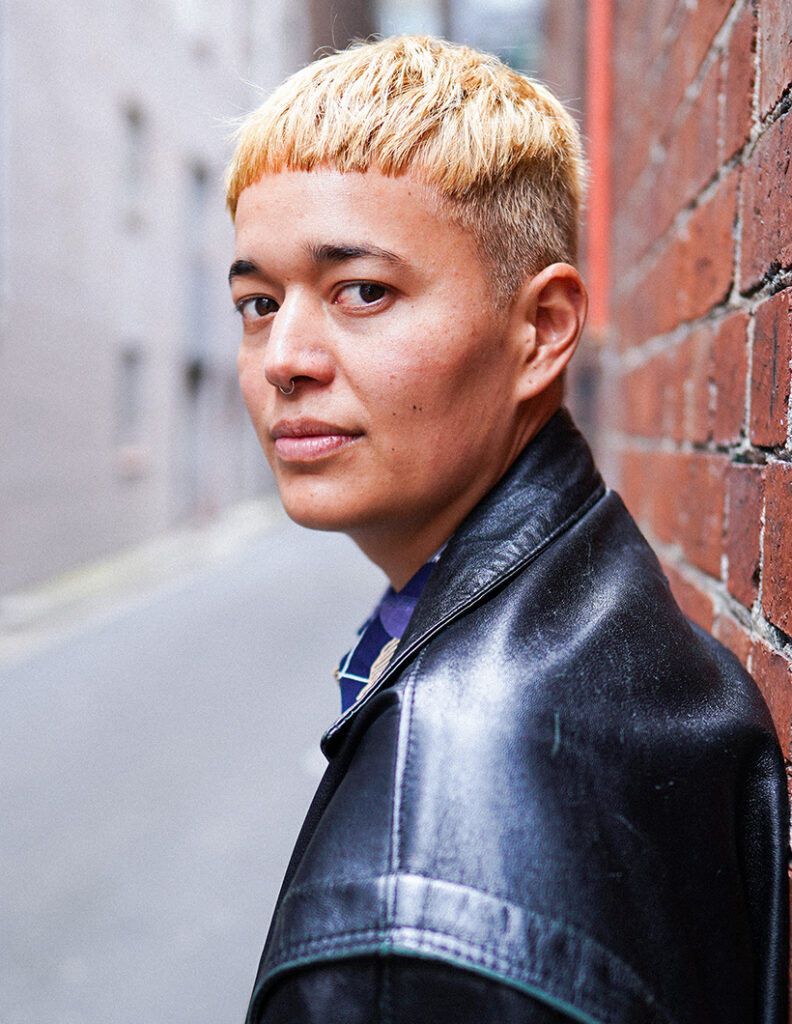
Butch Whispers: Lil Kalish
My name is Lil and I currently live in East Los Angeles. I grew up in Santa Monica on the Westside but in my adult life, I’ve moved all around the county and the world. When the pandemic hit, I was in London studying for a master’s degree and decided to come back to live with my folks in Los Angeles for the foreseeable future. Now I live in lovely a queer POC house in Lincoln Heights with two small dog friends.
I work full-time as a journalist covering a variety of things, ranging from surveillance tech and politics to queer and trans health and reproductive justice. In my work, I like to investigate and uncover corruption by powerful companies and individuals while bringing to light movements and people who are erased in mainstream media.
In my free time, you can most likely find me in the kitchen with a hefty haul of fresh fruits, vegetables, and hard-to-find spices. Or going on long walks in Mount Washington or at the Silverlake Reservoir with my binoculars in tow in search of birds. Pre-pandemic, I was a bit of a party animal and loved the thrill of dancing while sandwiched between sweaty strangers. I’ve recently found a dance studio near me that focuses on movement and improv work which I find super nourishing and a chance to be present with my body and others.
What does the butch identity mean to you? And how did you come to align with it?
I never thought I would align myself with the word “butch” but over the last few years I’ve leaned into it more and more into. I often call myself a “boy dyke” – I see that phrase as encompassing my relationship with boyishness and transmasculinity as well as my life as a dyke. I never felt butch enough. As a kid, I knew I wasn’t the kind of butch white woman I’d see scantly depicted in media. Over time though, I learned about the history of the phrase butch which has its roots in Black lesbian and working-class history. I found it to be more radical of a term than I had first thought. Although butch is sometimes seen as a hardness, a masculine toughness, for me, butch identity has been an exercise in being soft not only with myself but the world around me and of being of service to others. I love being able to hold and evoke any of the markers of my identity at once, being a boy dyke in one moment to a butch bottom or a fag in the next.
What is one thing that you’re really proud of?
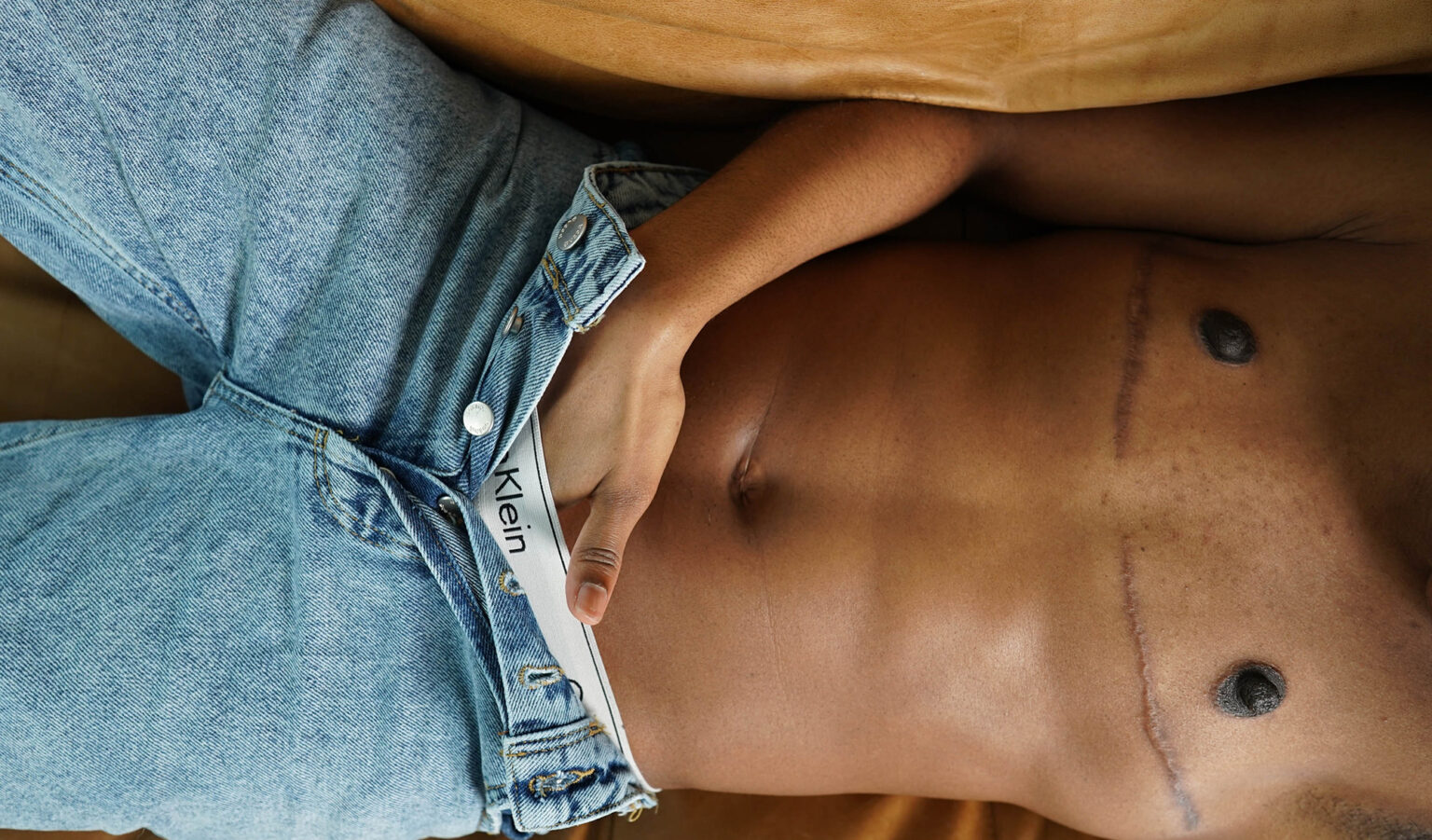
Honestly, I’m really proud of myself at the moment for taking the steps to feel at home in my body. I started a low dose of testosterone about seven months ago after obsessively reading transmasc literature for about a year and wondering if I could live with myself without trying hormones. I’m so glad I did. These past few months have taught me a lot about embodiment, about breath, and patience. I’ve never been so in tune with what my body is doing; I’ve never had to let go more than now. Beyond the physical and emotional changes, this experience has really pushed me to listen to my wants in a way that I couldn’t have imagined doing just 5 years ago.
What’s the queer scene like where you live, and what’s one thing you’d change about it if you could?
The queer scene in Los Angeles is pretty small for such a giant and sprawling city. Before the pandemic there were numerous queer dance parties and a handful that were run by and for people of color. The city also has a long history of radical queer organizing and nightlife. But since the pandemic hit, it seems to me there’s been a bit of a slow rebuild though new things are popping up every day, from queer sports meet-ups to café hangs and more. The best dyke scene I’ve witnessed so far was in London where there were truly a myriad of different community spaces, for Black dykes, South and East Asian queers and sober folks to name a few. Los Angeles definitely has the resources and the space – so I’d love to see more non-white queer and trans spaces, not only for dancing and performance but for community and movement building.
Where do you hope to be ten years from now?
In ten years’ time, I hope to be living outside of the US, with a community of queer and trans artists and writers of color. I hope to continue learning about gardening and woodworking. I’d like to have a slow-paced life, one that allows me to take hours-long walks if I so please. I hope to have a large kitchen for myself with a long dining room table so I can feed my friends. I hope to be writing and have a writing practice that includes friends and co-conspirators so I’m not working solo. I also hope to be in community with friends and lovers and family. I imagine there may be children to raise collectively, mouths to feed, gardens to tend to, histories to write, record, and archive with care.
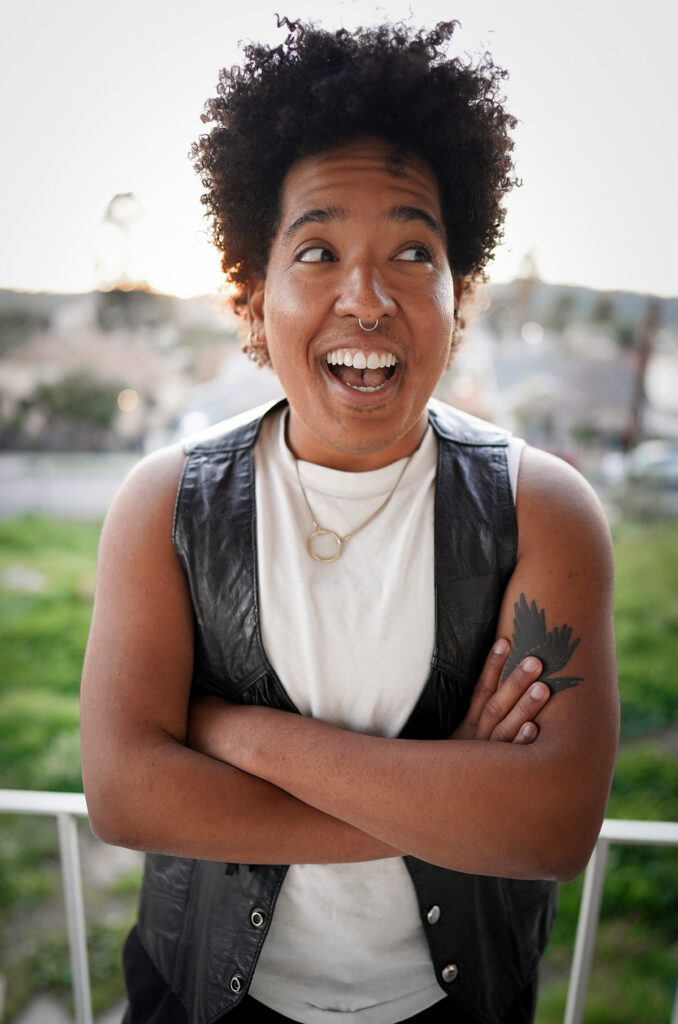
What does the butch identity mean to you? And how did you come to align with it?
I never thought I would align myself with the word “butch” but over the last few years I’ve leaned into it more and more into. I often call myself a “boy dyke” – I see that phrase as encompassing my relationship with boyishness and transmasculinity as well as my life as a dyke. I never felt butch enough. As a kid, I knew I wasn’t the kind of butch white woman I’d see scantly depicted in media. Over time though, I learned about the history of the phrase butch which has its roots in Black lesbian and working-class history. I found it to be more radical of a term than I had first thought. Although butch is sometimes seen as a hardness, a masculine toughness, for me, butch identity has been an exercise in being soft not only with myself but the world around me and of being of service to others. I love being able to hold and evoke any of the markers of my identity at once, being a boy dyke in one moment to a butch bottom or a fag in the next.
What is one thing that you’re really proud of?
Honestly, I’m really proud of myself at the moment for taking the steps to feel at home in my body. I started a low dose of testosterone about seven months ago after obsessively reading transmasc literature for about a year and wondering if I could live with myself without trying hormones. I’m so glad I did. These past few months have taught me a lot about embodiment, about breath, and patience. I’ve never been so in tune with what my body is doing; I’ve never had to let go more than now. Beyond the physical and emotional changes, this experience has really pushed me to listen to my wants in a way that I couldn’t have imagined doing just 5 years ago.
What’s the queer scene like where you live, and what’s one thing you’d change about it if you could?
The queer scene in Los Angeles is pretty small for such a giant and sprawling city. Before the pandemic there were numerous queer dance parties and a handful that were run by and for people of color. The city also has a long history of radical queer organizing and nightlife. But since the pandemic hit, it seems to me there’s been a bit of a slow rebuild though new things are popping up every day, from queer sports meet-ups to café hangs and more. The best dyke scene I’ve witnessed so far was in London where there were truly a myriad of different community spaces, for Black dykes, South and East Asian queers and sober folks to name a few. Los Angeles definitely has the resources and the space – so I’d love to see more non-white queer and trans spaces, not only for dancing and performance but for community and movement building.
Where do you hope to be ten years from now?
In ten years’ time, I hope to be living outside of the US, with a community of queer and trans artists and writers of color. I hope to continue learning about gardening and woodworking. I’d like to have a slow-paced life, one that allows me to take hours-long walks if I so please. I hope to have a large kitchen for myself with a long dining room table so I can feed my friends. I hope to be writing and have a writing practice that includes friends and co-conspirators so I’m not working solo. I also hope to be in community with friends and lovers and family. I imagine there may be children to raise collectively, mouths to feed, gardens to tend to, histories to write, record, and archive with care.
I never thought I would align myself with the word “butch” but over the last few years I’ve leaned into it more and more....Over time, though, I learned about the history of the phrase butch which has its roots in Black lesbian and working-class history. I found it to be a more radical term than I had first thought