Butch Whispers: Jo Cosme

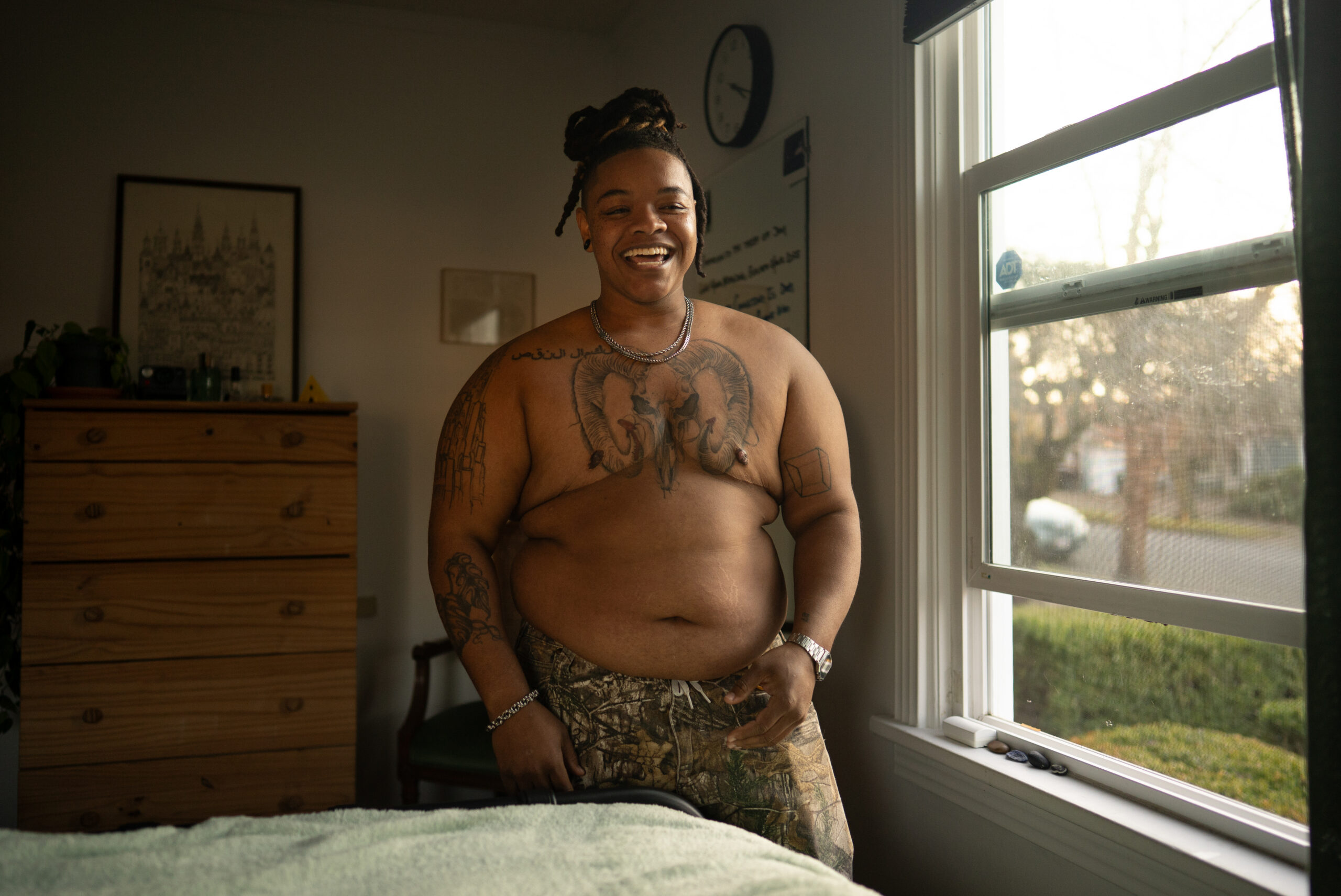
My name is Jo Cosme and I’m from Río Piedras, Puerto Rico. I’ve lived all my life in Puerto Rico, but currently I am living in Seattle. After Hurricane María, I lost my job and was displaced. I moved to the Northwest to start over and find a more economically stable circumstance so I could also help my mom back home .

I am a visual artist. Whenever I’m not at my day job, I’m usually working on an art project or launching new stuff for my shop: Tienda Bandida.

1. Tell me your favorite or funniest memory from your dating life.

I think one of the funniest things about my dating life is that I perpetually never know if it’s a date or not.

2. How does being butch positively impact your life? And what’s been / what is the hardest thing about being butch for you?

In Puerto Rico, being gay still hasn’t been socially accepted. So, to no surprise, if you’re a butch – you will be subject to all forms of violence, ongoing ridicule and unemployment. Growing up Catholic and in Puerto Rico, I internalized all the misogyny, butchphobia and lesbophobia that surrounded me for many years. I was so ashamed of myself because I was unable to act or look like a “normal” woman. I hated myself for not being born a man. For years I tried to destroy these parts of me, which led to a lot of self-destructive actions and identity issues. Later, when I began to make peace with my butchness, many women I dated or went out with would expect me to act like a man or treated me like one – which wasn’t healthy either. I found myself projecting many toxic masculine traits and I hated my body.

Fast forward, after a lot of growth and work – I’ve begun to heal my butchness. In time, I learned how to be soft, how to practice healthy masculinity, and build relationships with women who could love me for who I was and what I had to offer (not their projections of me). My butchness doesn’t make me any less of a woman nor does it make me any less feminine. Masculinity and femininity co-exist beautifully within me. Only through accepting my butch self could I find this sense of balance. It’s a work in process, but I’m learning to love the many, many grey areas inside butchness and what it means to be a Puerto Rican butch lesbian woman.

3. What is the most important thing about your butch identity you wish people knew?

I can’t limit it to just one, but here are a few important things for people to know about MY butchness: One, as this page states – Butch is NOT a dirty word and it is NOT a bad identity. Don’t come at me with that “You can be a lesbian, but just don’t be butch” narrative. Hard pass. Two, there isn’t a correct way to be butch. There’s no such thing for me as, “too butch” or “too soft to be butch”. And because I’m butch it doesn’t inherently mean I’m gonna be in command at all times – I also wanna be asked out, cuddled and cared for. Three, butches have always existed and we have always been disrupting the gender binary and the heteropatriarchy. And lastly, because I’m a butch it doesn’t fundamentally mean I want to be anything other than a masculine woman. I wish people would stop misgendering or questioning me when I have already stated who I identify as and what pronouns I use.

4. What is something on your bucket list that makes you blush?

Something that makes me blush? All I know is, that Hard Femmes make me blush point-blank.

5. Who or what have you learned the most from in life?

In high school, I had a very influential teacher who later became the big sister I’d always dreamed of as an only child. She not only provided me with a safe place from the bullies in the classroom, but she also helped me develop my critical thinking skills. She exposed how being LGBTQ was perfectly normal and helped me navigate depression and my neuro-divergent brain. Her guidance could not have come at a more crucial time. This experience taught me how undervalued educators are in our society. Some teachers out there really do save lives.

6. What’s something in your life that’s gone unfulfilled that you’re still searching for?

A lezbro that lives close to me. My current ones live far away and I miss having that everyday closeness of picking each other up randomly at our houses, going to play pool together, watching movies, keeping each other updated on the current chisme, etc.

7. What has been the best thing that you’ve been wrong about in your life?

That I’m not strictly a top. Aaaaand with that I learned I don’t have to be one just because I’m butch.

@jo.cosme

Butch Whispers: Lil Kalish

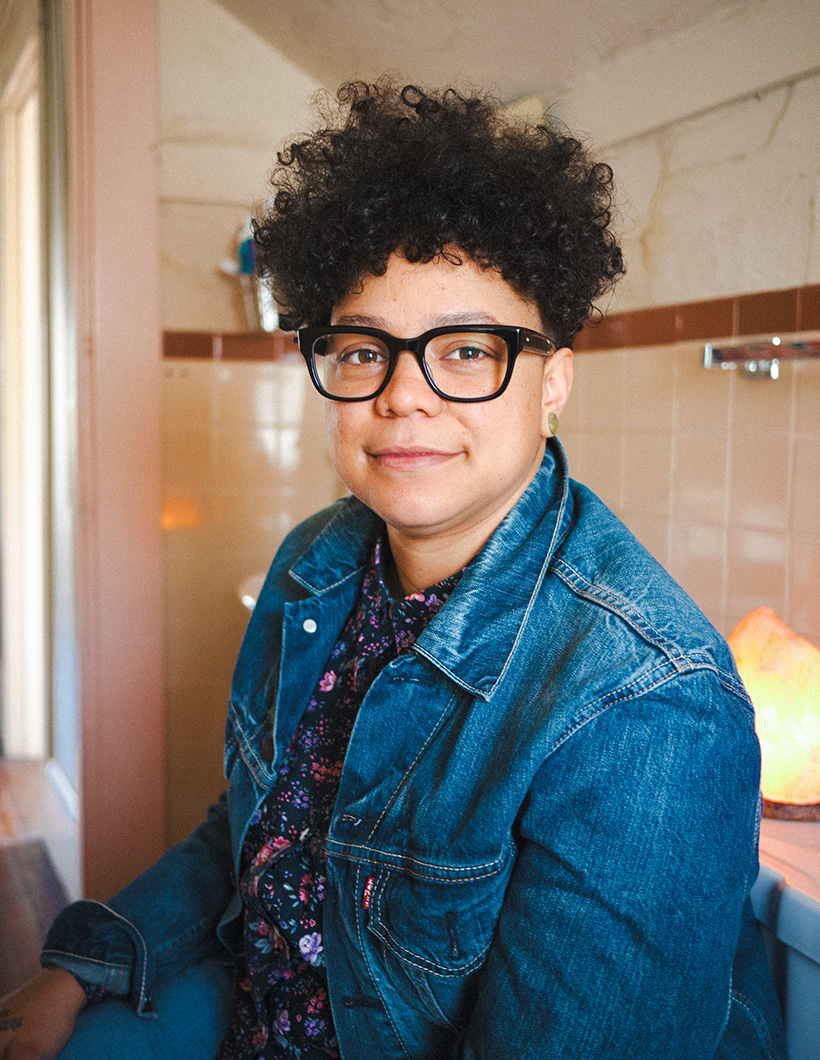
My name is Lil and I currently live in East Los Angeles. I grew up in Santa Monica on the Westside but in my adult life, I’ve moved all around the county and the world. When the pandemic hit, I was in London studying for a master’s degree and decided to come back to live with my folks in Los Angeles for the foreseeable future. Now I live in lovely a queer POC house in Lincoln Heights with two small dog friends.

I work full-time as a journalist covering a variety of things, ranging from surveillance tech and politics to queer and trans health and reproductive justice. In my work, I like to investigate and uncover corruption by powerful companies and individuals while bringing to light movements and people who are erased in mainstream media.

In my free time, you can most likely find me in the kitchen with a hefty haul of fresh fruits, vegetables, and hard-to-find spices. Or going on long walks in Mount Washington or at the Silverlake Reservoir with my binoculars in tow in search of birds. Pre-pandemic, I was a bit of a party animal and loved the thrill of dancing while sandwiched between sweaty strangers. I’ve recently found a dance studio near me that focuses on movement and improv work which I find super nourishing and a chance to be present with my body and others.

1. What does the butch identity mean to you? And how did you come to align with it?

I never thought I would align myself with the word “butch” but over the last few years I’ve leaned into it more and more into. I often call myself a “boy dyke” – I see that phrase as encompassing my relationship with boyishness and transmasculinity as well as my life as a dyke. I never felt butch enough. As a kid, I knew I wasn’t the kind of butch white woman I’d see scantly depicted in media. Over time though, I learned about the history of the phrase butch which has its roots in Black lesbian and working-class history. I found it to be more radical of a term than I had first thought. Although butch is sometimes seen as a hardness, a masculine toughness, for me, butch identity has been an exercise in being soft not only with myself but the world around me and of being of service to others. I love being able to hold and evoke any of the markers of my identity at once, being a boy dyke in one moment to a butch bottom or a fag in the next.

2. What is one thing that you’re really proud of?

Honestly, I’m really proud of myself at the moment for taking the steps to feel at home in my body. I started a low dose of testosterone about seven months ago after obsessively reading transmasc literature for about a year and wondering if I could live with myself without trying hormones. I’m so glad I did. These past few months have taught me a lot about embodiment, about breath, and patience. I’ve never been so in tune with what my body is doing; I’ve never had to let go more than now. Beyond the physical and emotional changes, this experience has really pushed me to listen to my wants in a way that I couldn’t have imagined doing just 5 years ago.


3. What’s the queer / dyke scene like where you live and what’s one thing you’d change about it if you could?

The queer scene in Los Angeles is pretty small for such a giant and sprawling city. Before the pandemic there were numerous queer dance parties and a handful that were run by and for people of color. The city also has a long history of radical queer organizing and nightlife. But since the pandemic hit, it seems to me there’s been a bit of a slow rebuild though new things are popping up every day, from queer sports meet-ups to café hangs and more. The best dyke scene I’ve witnessed so far was in London where there were truly a myriad of different community spaces, for Black dykes, South and East Asian queers and sober folks to name a few. Los Angeles definitely has the resources and the space – so I’d love to see more non-white queer and trans spaces, not only for dancing and performance but for community and movement building.

4. Where do you hope to be ten years from now?

In ten years’ time, I hope to be living outside of the US, with a community of queer and trans artists and writers of color. I hope to continue learning about gardening and woodworking. I’d like to have a slow-paced life, one that allows me to take hours-long walks if I so please. I hope to have a large kitchen for myself with a long dining room table so I can feed my friends. I hope to be writing and have a writing practice that includes friends and co-conspirators so I’m not working solo. I also hope to be in community with friends and lovers and family. I imagine there may be children to raise collectively, mouths to feed, gardens to tend to, histories to write, record, and archive with care.

@almost_sparrow

Meet A Butch: Aneesah Rasheed

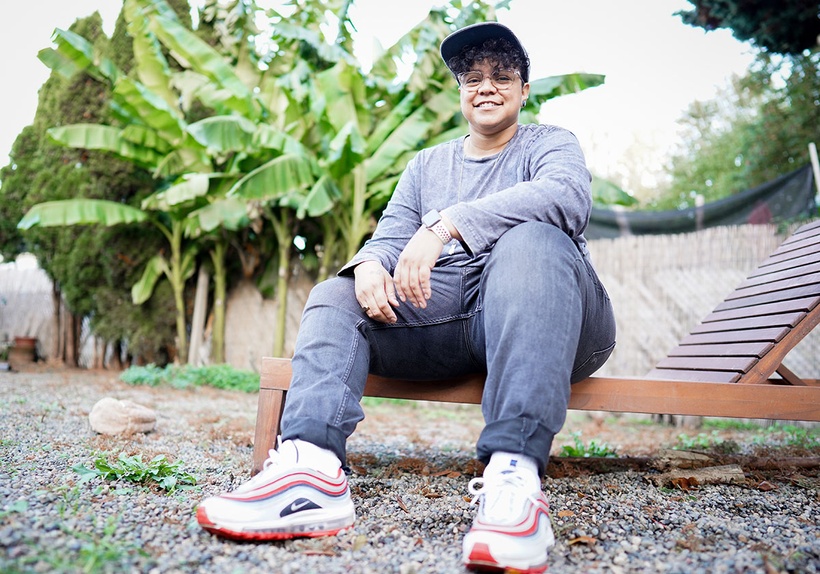
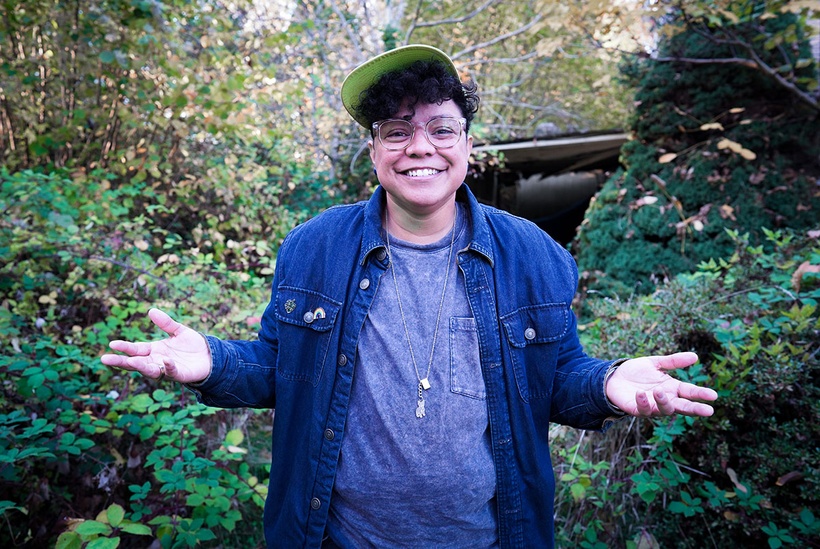
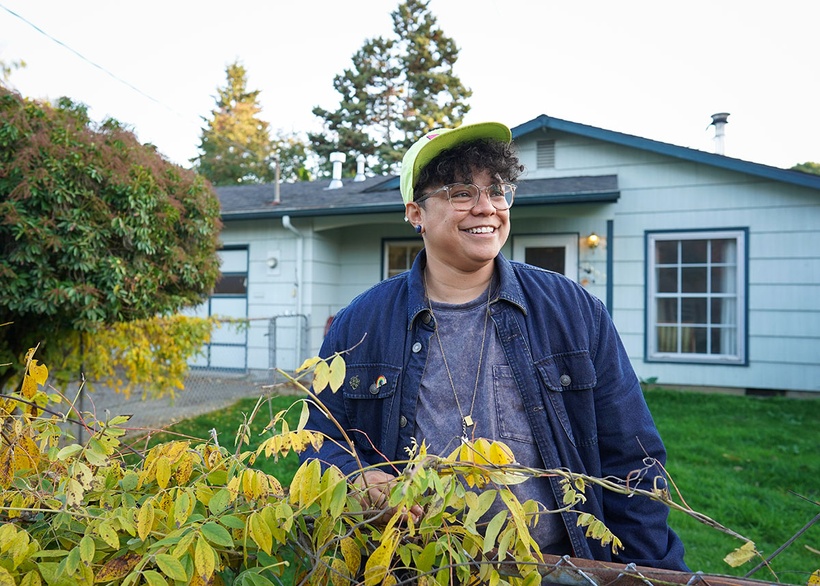
My name is Aneesah Rasheed and while I’m originally from San Diego (619 baby!), I’ve been reppin’ the city of Roses (Portland, OR) for a good decade or so. When I’m not working in Tech and Diversity, Equity & Inclusion, I’m generally trying to make the world a better, more equitable place. I will do just about anything for the love of my life, Megan, and our rescue pups, Wulstan and Delilah. On any given day, I can be found catchin’ em all, playing Legends of Zelda, organizing my Rubik’s cube collection, and sending my partner adoption bio’s of dogs she says we can’t get (You’ve twisted my arm, I can solve a Rubik’s cube in 40 seconds!).

1. You’re given $20,000, how would you spend it?

This is going to be boring, but I would pay down my debt with most of it and maybe spend a bit on a van that I could eventually travel the US in. It would have to be big enough for me, bae, pup 1 and pup 2.

2. What’s something you know now that you wish you’d known when you were 12?

I wanna say I’d tell myself to learn how to save and invest because 36-year-old me would find that convenient but 12-year-old me wouldn’t listen to anything so…..maybe that boobs aren’t too scary; That I’d squeeze a bunch and eventually not have to have my own anymore?
3. Where do you hope to be ten years from now?

Picture this: My hot girlfriend is wife’d up (to me of course duh). We have two to three mini-us’s running around a big ranch-style house with good light, not-shitty neighbors, and 13 more dogs. My consulting firm is making big changes for the communities served in tech and healthcare, I’ve figured out real estate investment, and I’m generating wealth so I can spoil the heck out of everyone I love. (dogs)

4. Who are the two people most important to you?

My partner is my rock. She pushes me, encourages me and doesn’t let me settle. They’re not people but I have to give a shout out to the best sentient beings I know, my pups. Everyday they teach me what unconditional love is and without them, I’m not sure I would ever have experienced that. Sappy af, I know.

5. What is one thing that you’re really proud of?
I used to manage an apprenticeship program that helped jump-start people’s careers as junior software developers. I made it a point to reach out to communities of color and was told many times that, “those women,” or folks I’d selected weren’t, “right,” for the program; that they wouldn’t understand the culture. Before leaving, I helped multiple folks of color get internships as junior software developers and saw many of them offered jobs as well. They hustled harder than anyone else in the program and a lot of them still reach out to me about their wins and successes.
6. What’s the queer / dyke scene like where you live and what’s one thing you’d change about it if you could?

I’m really lucky- the queer scene is dope in PDX! I think more often than not, people are able to be authentically themselves and find community across many spectrums. Something I think we could all do better is not make such quick assumptions about one another. To keep it light, let’s talk (and hopefully not offend) Portland queers… I find the Portland dyke mullet to be wildly offensive. I don’t get it. But you know what, 67% of my queer fam has the dyke mullet so I can’t assume any one thing or the other about it (much love to my mullet babes!)

7. What are your 2 favorite and 2 least favorite memories from childhood?

I’m half black and half Mexican and we have big families, so; I don’t have one solid favorite memory but the general chaos of a small stuffy house filled with music, dogs, thousands of cousins, the smell of carne asada and my Abuela making more rice… it was a good time.

Least favorite childhood memories? Well, I was really hoping God was gonna turn me into a boy so there was some disappointment on several fronts there BUT Pharrell and swaggy masc folks of Pinterest turned me into the butch daddy dyke I am today so… It worked out.

8. What does the butch identity mean to you? And how did you come to align with it?

There’s a privilege that comes with my butch identity, and to some extent it’s at odds with my earlier thought that queers in pdx need to stop making quick assumptions about one another. There is inherently a quick assumption made by most people who see me, a butch person. I’m queer, mass-presenting, and there’s little questioning that. In other spaces, other cities, other times, my butch identity (a very visible, space-taking identity) is a huge burden. Here and now, butch identity is visibility and pride.