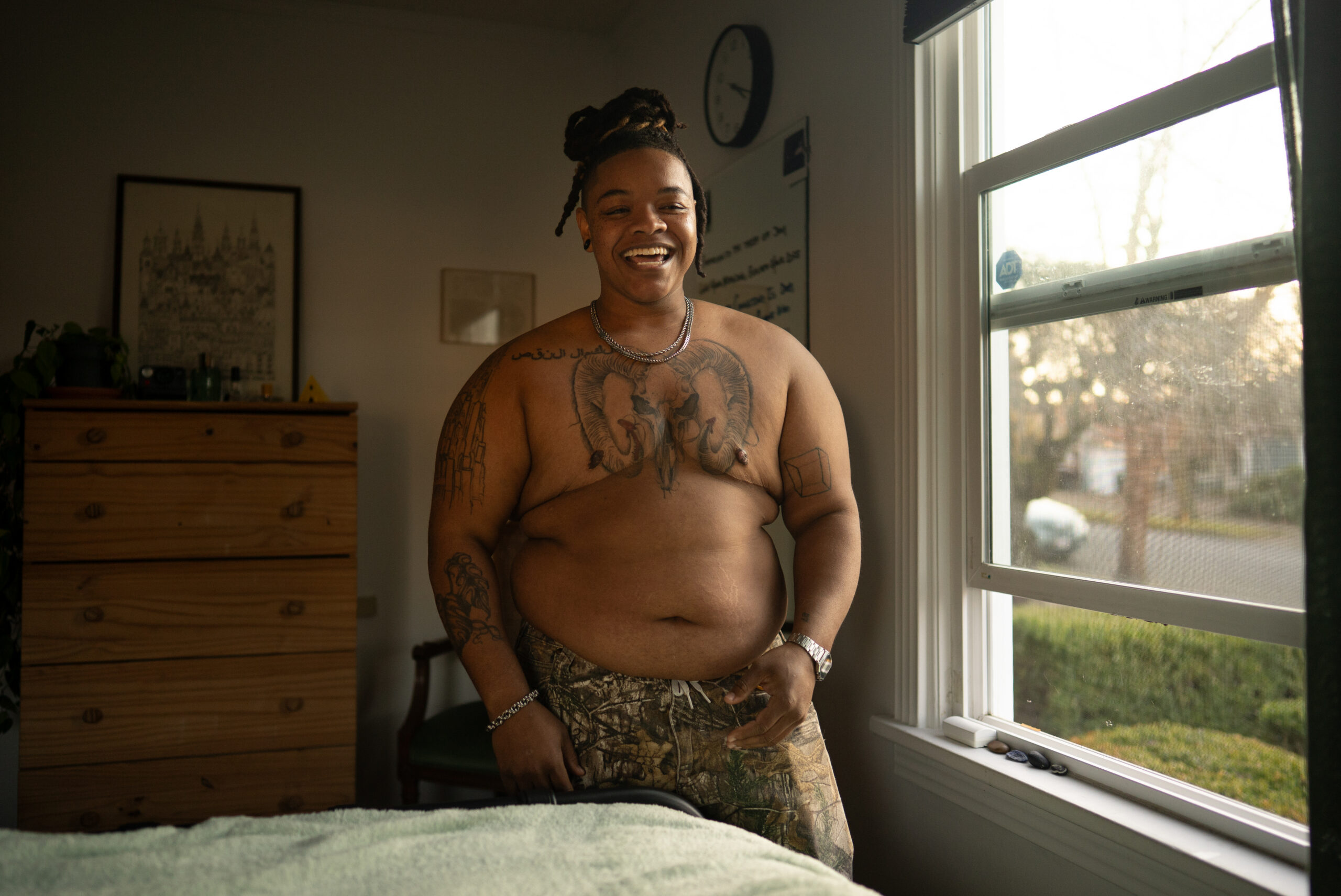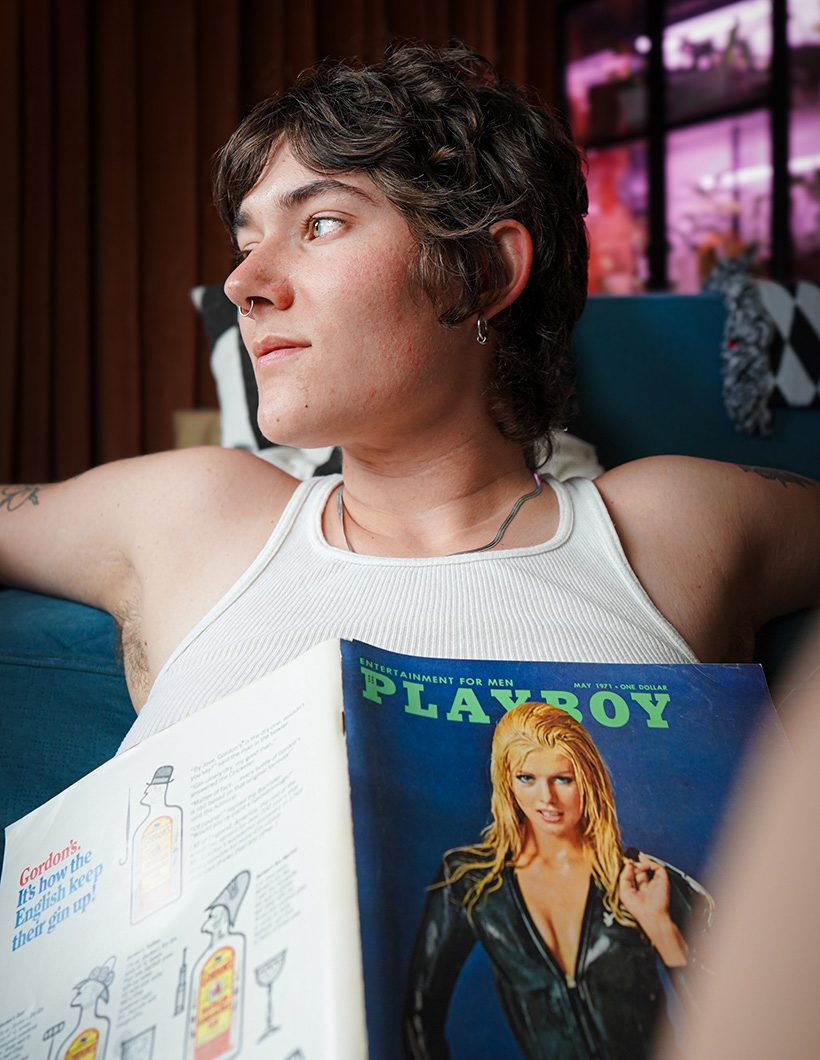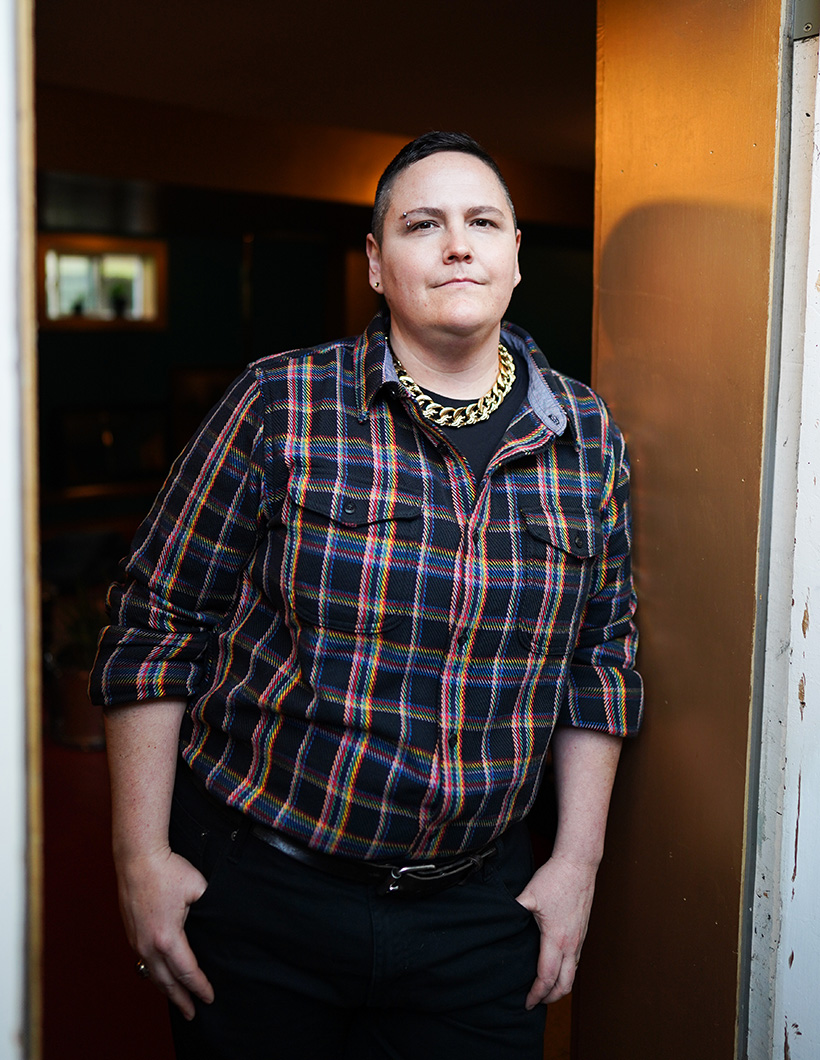
Butch Whispers: Caley Murray

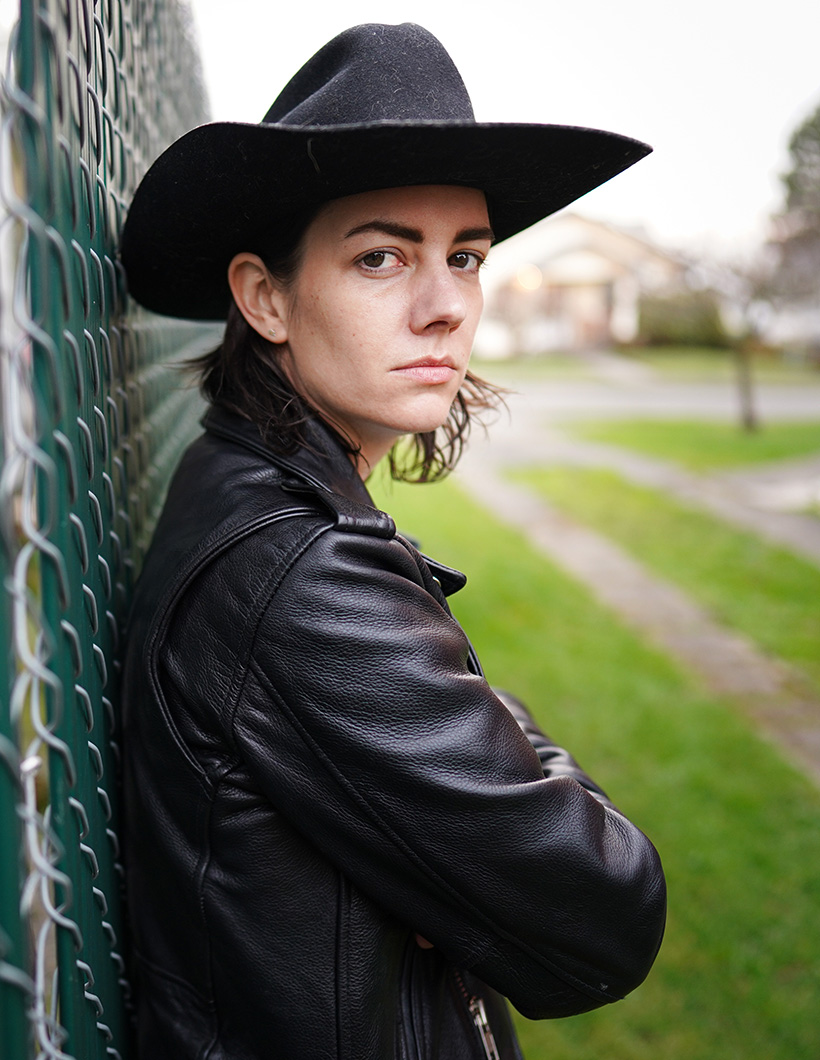
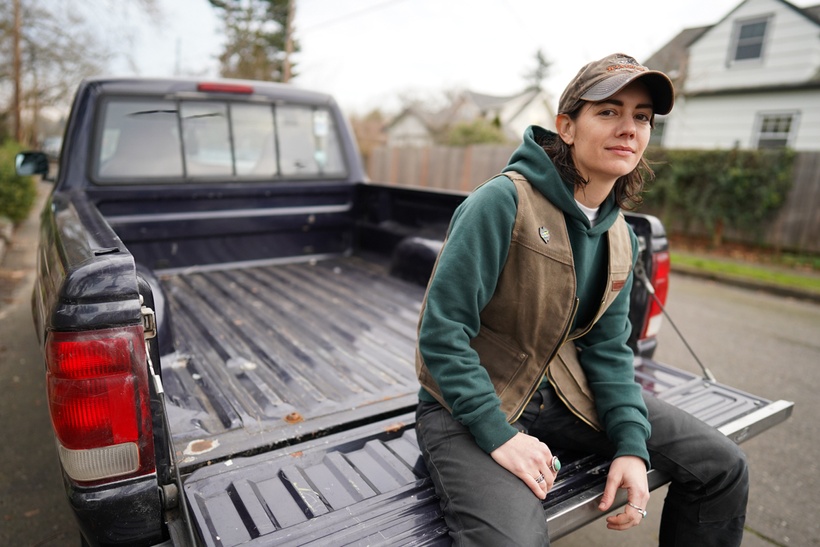
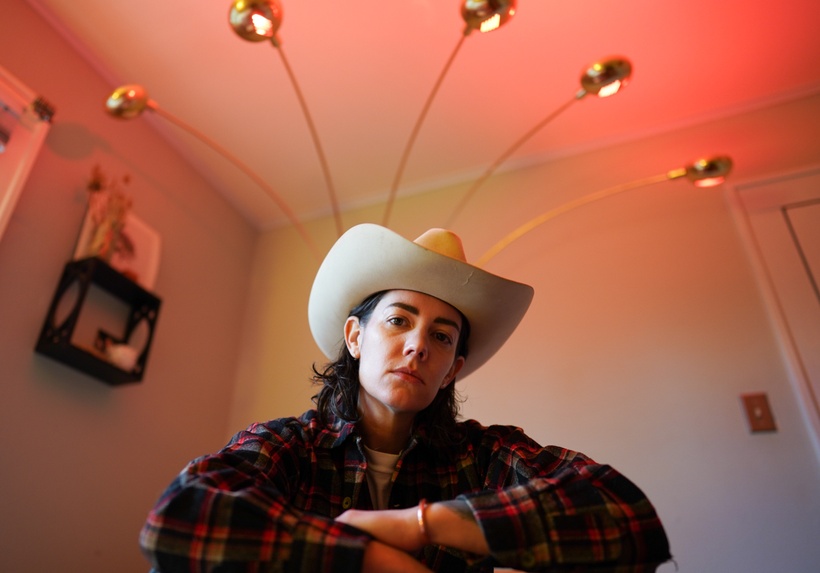
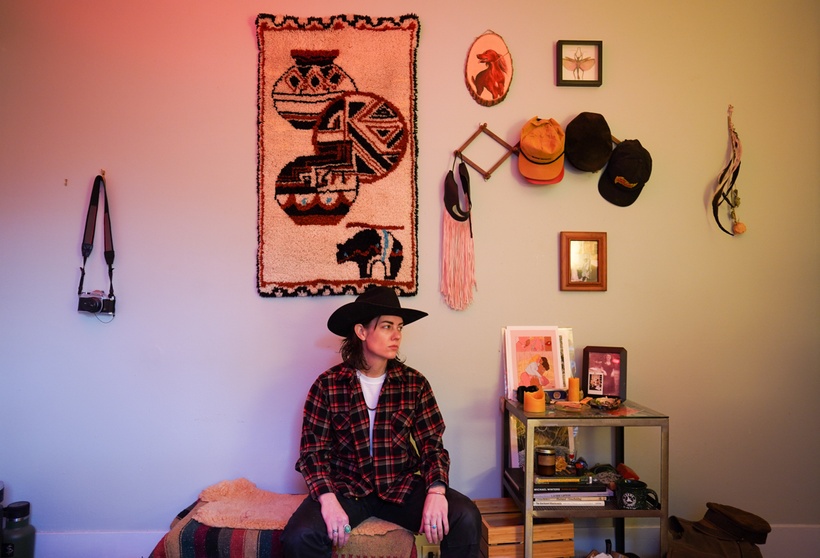
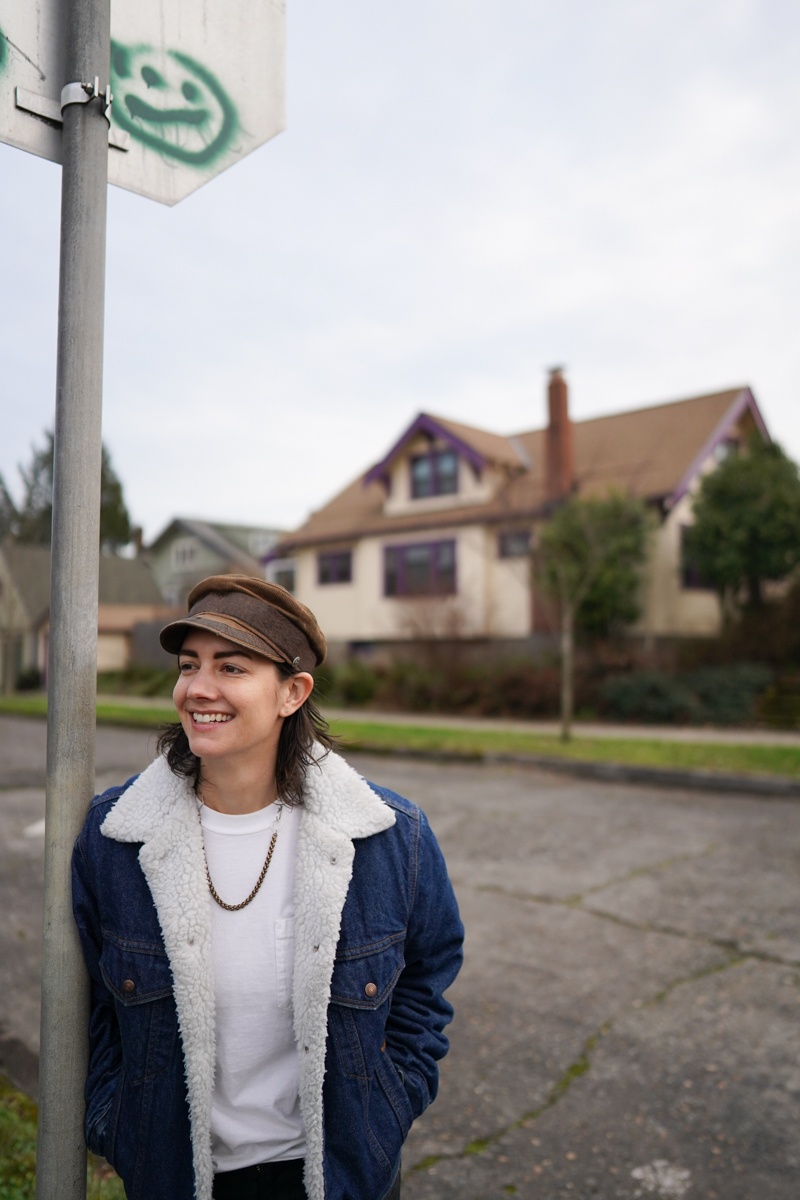
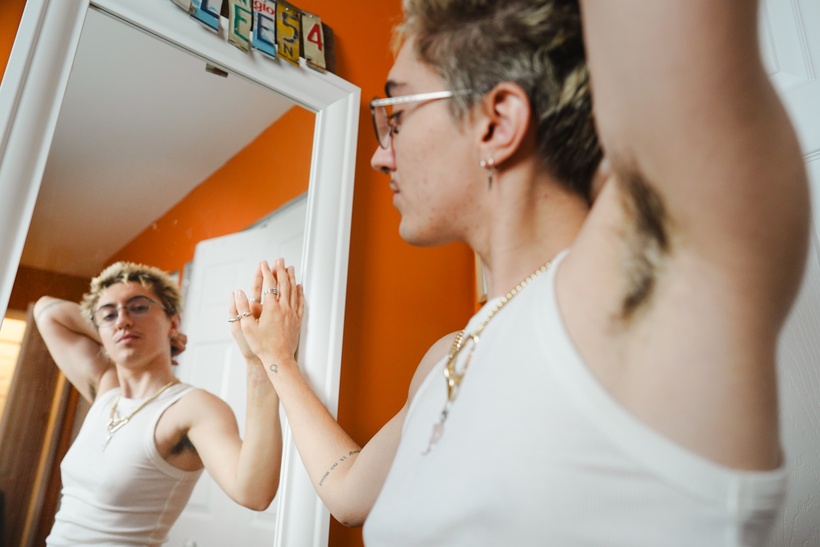
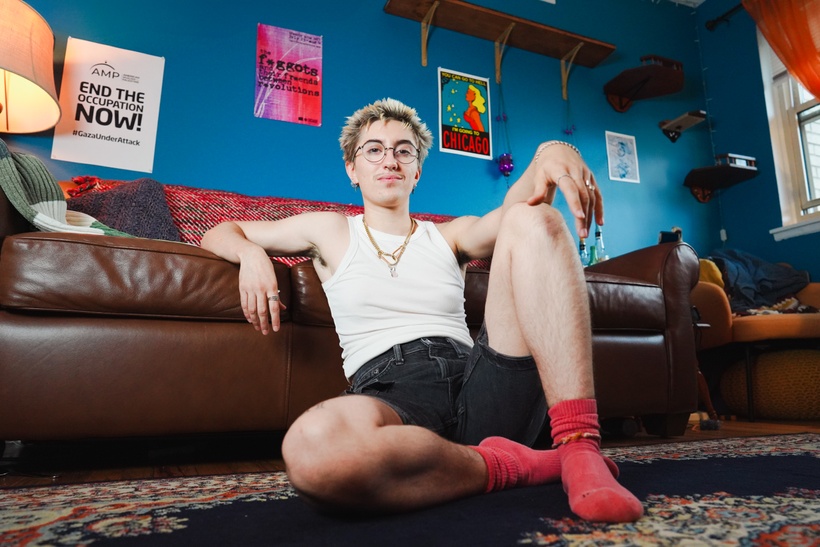
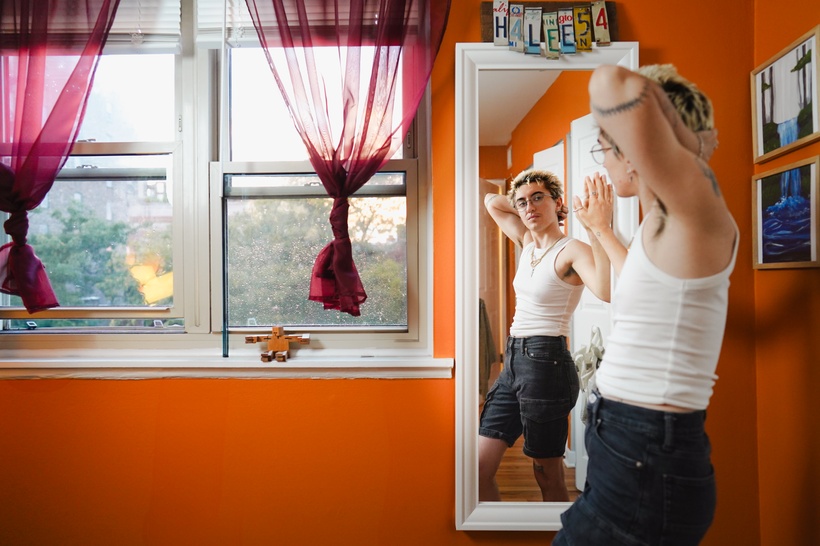
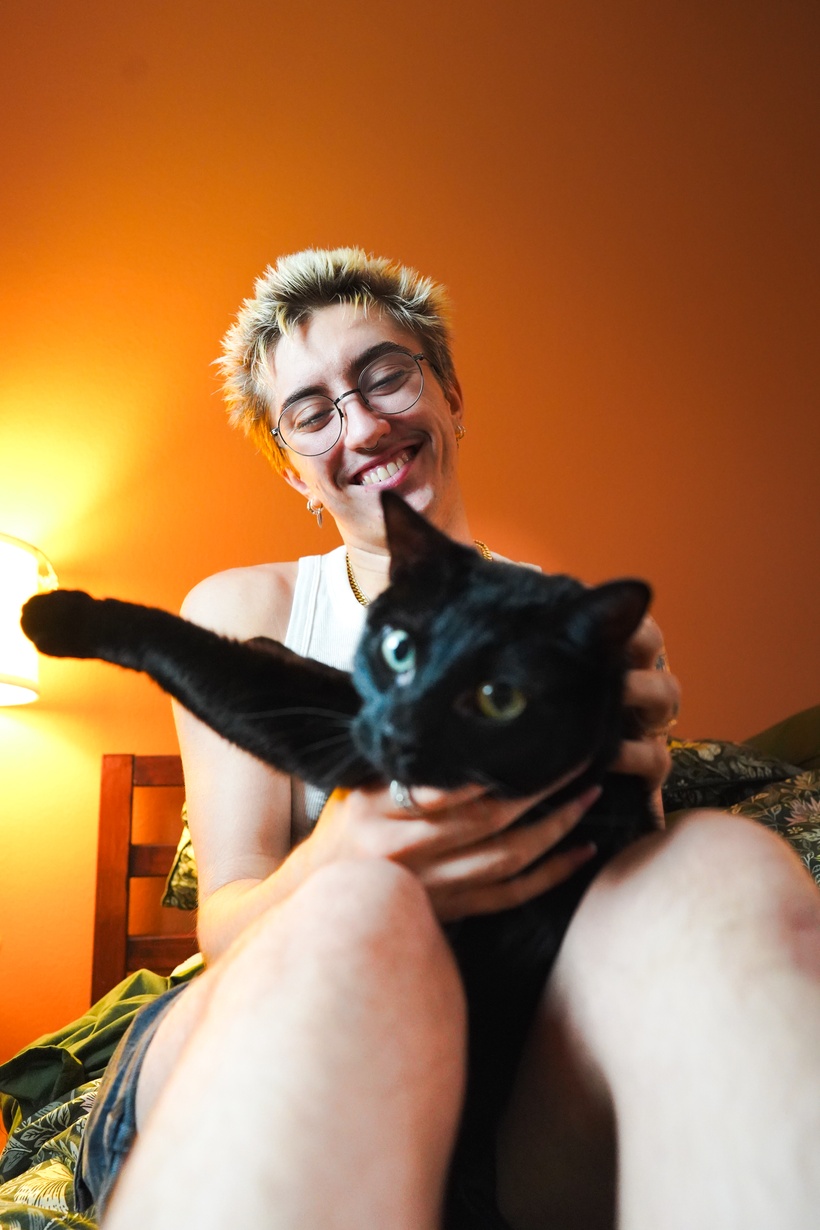
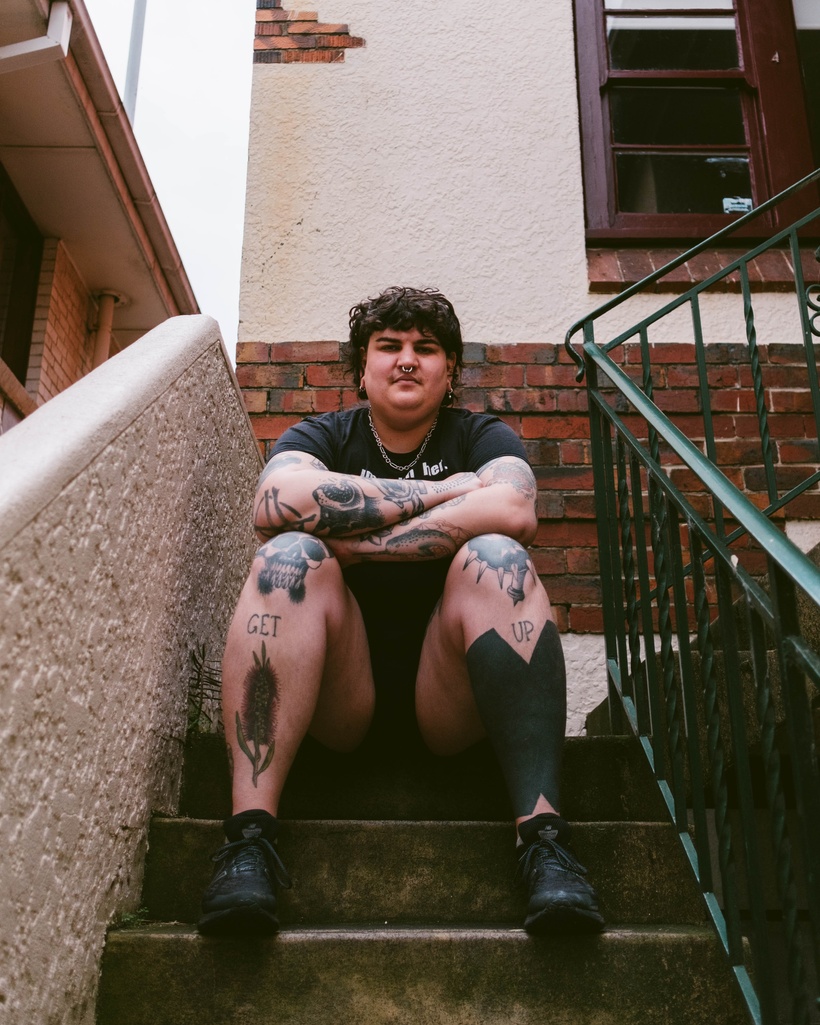
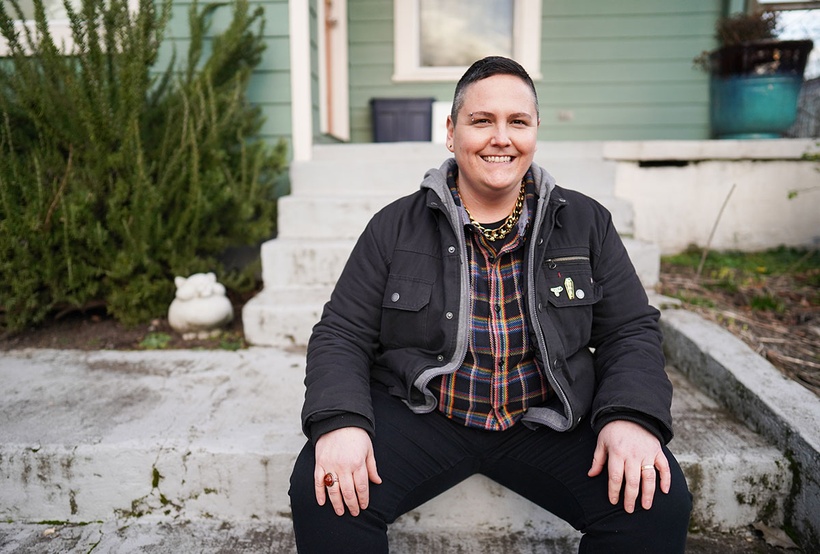
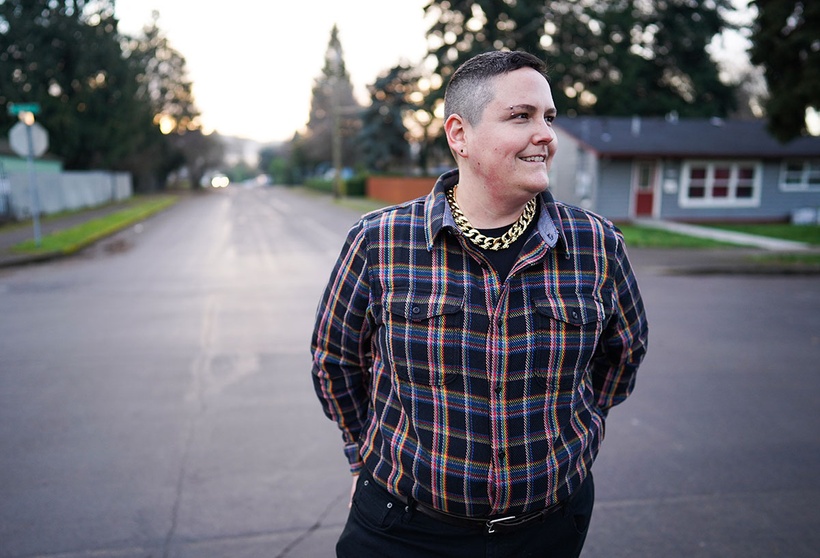
Heyo! My name is Caley Murray and I live in Portland, OR. I’m the program director at Rock ‘n Roll Camp For Girls and I’m a big ol’ butch dyke 🙂

1. You’re given $20,000, how would you spend it?

If I was given $20,000, I would put up a privacy fence around my yard and buy a jacuzzi.

2. What’s something you know now that you wish you’d known when you were 12?

I wish when I was twelve that I knew that I was gay and that I didn’t have to fit into the mold of womanhood presented to me by society and my family.  I remember sitting at the kitchen table with my mom and our neighbor while they did their nails together. They would try to get me to let them do my nails and I always refused. Except for one time, they convinced me to let them put clear polish on me. I regretted it immediately. I hated the chemical smell it gave off and the way its shine distracted me when I was doing something with my hands. I rubbed my fingers in the mud until the shine was gone. They would tell me.  “It’s a shame because you have such nice nails. One day, you are going to love doing your nails, and you’ll be begging us to do them!” I believed them. But that day never came. I never woke up one day and suddenly decided it was time to shed my tomboy skin and femme it up for the boys. It makes me laugh just thinking about the fact that I ever believed that would be my fate. But when you are young and don’t know who you are yet, it’s easy to believe the people around you who seem so sure of how everything is supposed to be. I wish I had known how to listen to myself and trust my own desires and preferences despite the opinions of others.

3. Scroll back through your phone and describe the 5th last image to us.

It is a picture of my pet rats, Tuna and Rosie, snuggling with their noses together in their cardboard box sky condo.

4. Where do you hope to be ten years from now?

Ten years from now I hope to be still madly in love with my wife, living on the Oregon Coast, self-employed as a sound engineer specializing in live sound, and producing my own music as well.

5. What is one thing that you’re really proud of?

I am really proud of the life my wife and I have built together. Things were not easy for my family during my childhood. I was raised by a single mother of three. My mom made eleven dollars an hour and my absent father didn’t pay child support. I was a parentified child who took on the role of father to my little brother. I started working at a fast food place when I was fourteen years old. I remember being stressed out about money and whether or not we were going to lose our house all the time. It was exhausting. I decided that my goal when I grew up was to have a simple, childless life with the security of a peaceful home, and an equal partnership with someone I could trust completely. Having come from a family of divorce, I was skeptical about whether or not this possibility even existed. I would picture myself in my future relationships being an all-sacrificing, super solid butch who took care of her partner’s every desire and never needed anything in return. But over the years, I discovered that my idea of my role in a relationship wasn’t sustainable. The hardest thing I had to learn to do was let my partner take care of me in return. It’s hard to let your guard down and be vulnerable in that way, but I don’t think that you can have a true partnership without being able to lean on each other. I am proud of the ways I have grown and evolved as a person and a partner over the last eleven years with my wife.
6. What’s the queer / dyke scene like where you live and what’s one thing you’d change about it if you could?

I feel like I have been pretty detached from the dyke scene for the last couple of years because of Covid. I do miss the days when we used to have our own dyke bar. As I get older, I find myself wanting more opportunities to interact with dykes outside of the partying and dancing scene. I find it easier to meet new people when there is an activity involved and you can actually talk and get to know people and flirt. Like, instead of just dancing in bars all the time, let’s watch each other throw knives and then sit around a campfire. And I have always been envious of the gay cruising scene and wish that there was more of a slutty butch for butch cruising culture in our area.

7. How does being butch positively impact your life?

Being butch positively impacts my life by allowing me to easily be seen by my fellow dykes and queer community. If you’re as butch as I am, you are very rarely mistaken as straight. I am grateful that I don’t have to endure the burden of coming out to the majority of the people I meet.  Also, being butch and a top, I have never had a problem finding a date. :Insert top shortage joke here: There is a lot of desire out there for butches, which I really appreciate.
8. How does being butch negatively impact your life?

Being easily clocked as a butch dyke is a double-edged sword. I receive a lot of hostility out in the world, especially from men. It usually comes in the form of disapproving sneers and looks of disgust. Every now and then they will do something bolder, like yell a slur or shoulder check me as they walk by. Old people glare at me a lot. I get told that I am in the wrong bathroom. I cannot hide what I am. I have gotten really good over the years at returning the disapproving looks or sometimes even asking gawkers if I can help them with something, which usually freaks them out. Sometimes I wish I could just blend in and go about my day in the world and not have to deal with normies who don’t know what to think of me.
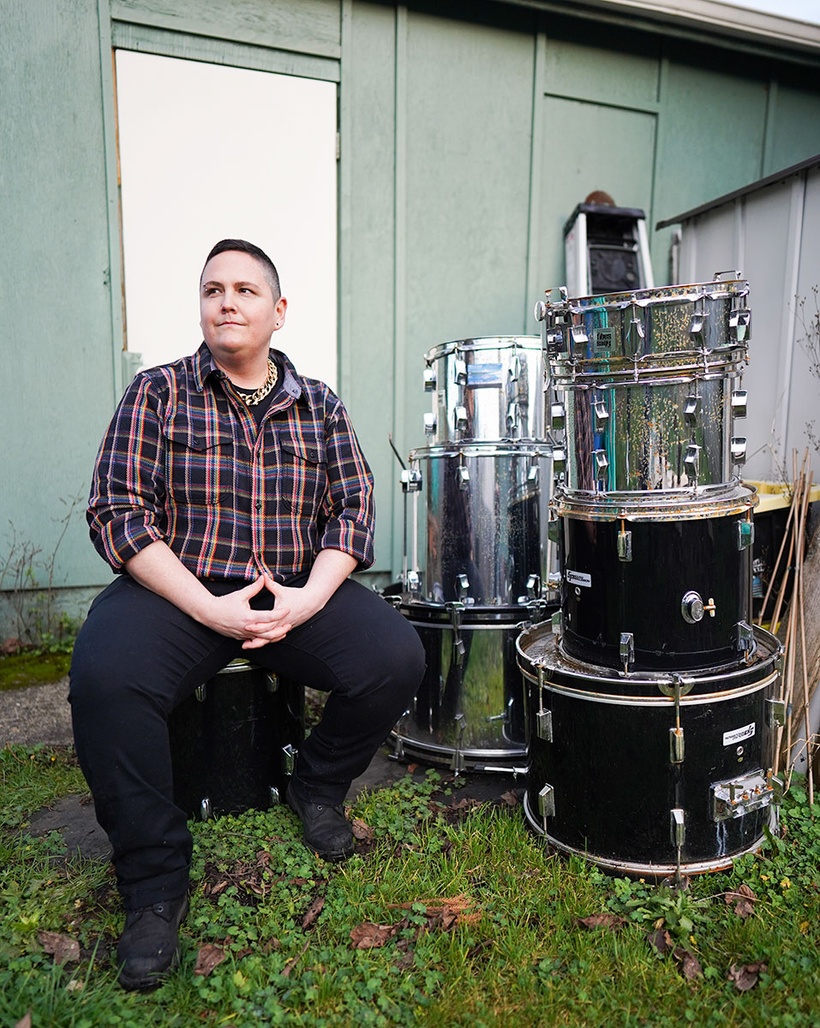
@your_butch_dad

Butch Whispers: Mara Tucker

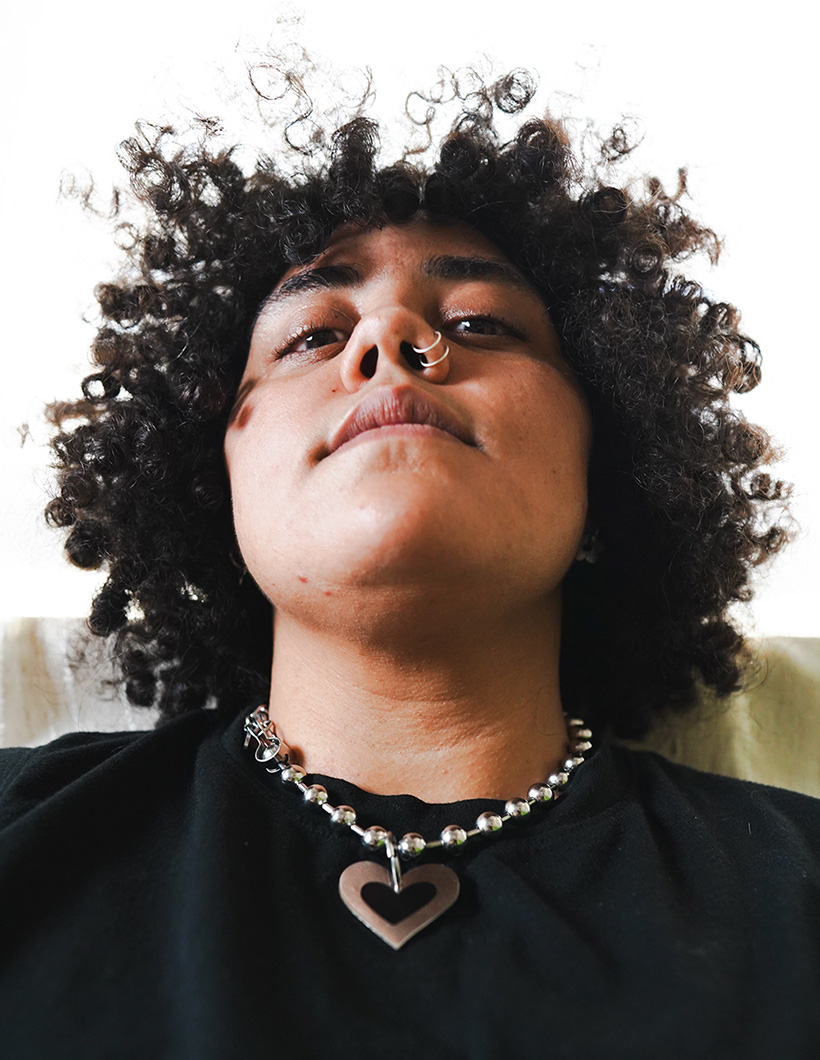
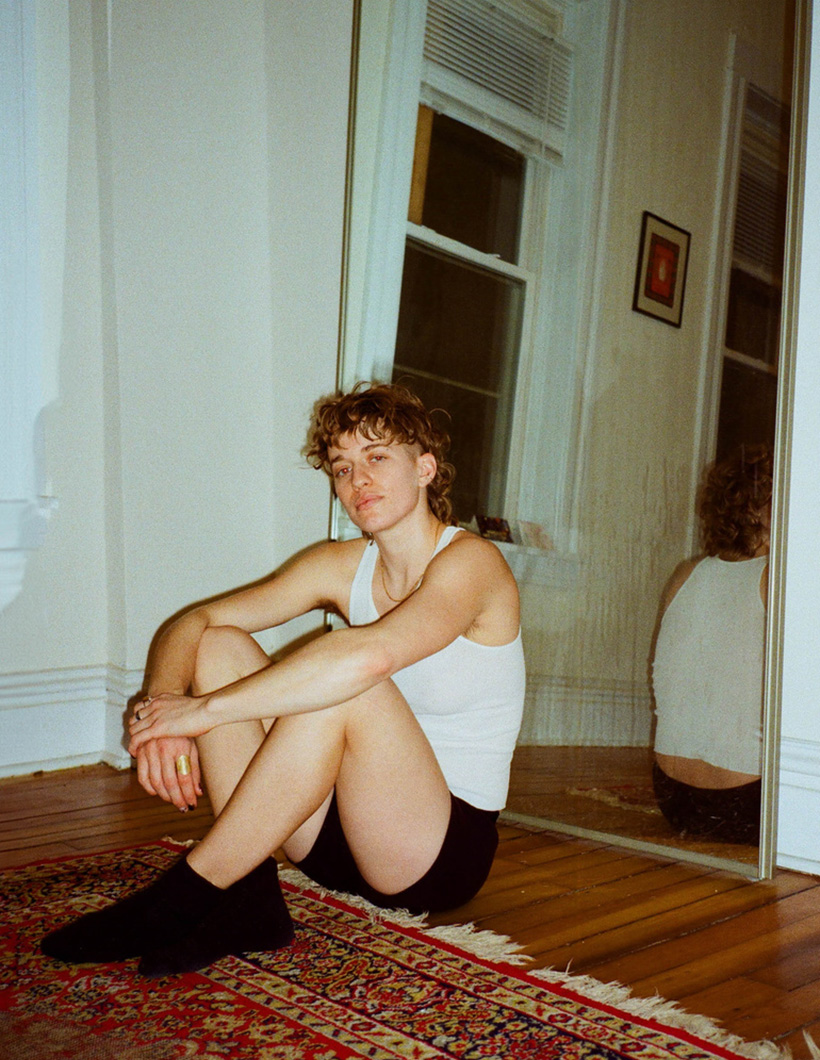
Heyo I’m Mara!  Aliases include Buck, Colton Buck, and Lou. I was raised in Newberg, Oregon.  I’ve spent most of my adult years in Portland, this city has always felt like the best place for me as a queer person.  I’ve built long lasting friendships and community here.  I’ll never acclimate fully to the persistent rain and gray skies, but it’s home. Spring is a different story, once spring comes, my camping gear is at the ready, and I’m checking road conditions at my secret spots. I love to hike, backpack, shoot guns, forage, stare into the campfire, swim in alpine lakes….always dreaming about the woods. Traveling and experiencing new places keeps me hopeful and engaged. Writing keeps me grounded.  Spending time with loved ones gives me a sense of harmony.  And then there’s dancing with the queer crew, for bliss.

1. What’s something you know now that you wish you’d known when you were 12?

Small town life in the 90s awarded me the liberty to be adventurous, unsupervised, ceaselessly outside playing and/or getting into mischief.  Everything felt so familiar and simple.  By age 12 though, my boyish, rowdy, wide-eyed disposition was being chipped away at by a withdrawn and excruciatingly self conscious pre-pubescent girl.  Quickly learning the bleak realities of being a tween tomboy, I became broody.

It started with my friends, who were boys, swapping inside jokes about me.  The rules seemed to change overnight. I was no longer one of them.  A lot happened in the subsequent years that I don’t like to think about, or even discuss with my therapist.  What sticks with me about that time is that I believed there were only two paths to take: one for boys and one for girls.  Neither path felt authentic for me. I became the disinterested friend in the group who would sneak away from slumber parties to go hang out with the brother or parents or sit alone.

I wish that I had known then that I didn’t need to camouflage myself to gain the validation of my peers, my family, the community.  I wish I had known that engaging more with the idea of who I was, and what kind of person I wanted to be, would benefit me more than theorizing/worrying about future heteronormative milestones.  Mostly I wish I’d known that the future me, in my thirties, was extremely proud of how I held on to my curiosity, and how downright scrappy and defiant I was throughout some awkward and formative years.

2. Where do you hope to be ten years from now?

I hope to be living on a bit of land in the country, with dogs, chickens, a sweetheart.  Space for projects.  A nice garden.  I’m open to many possible futures, but I might as well go with the romantic prospect.  It’s difficult to have a specific vision for the future when the last two years have shown me how fragile and unpredictable our lives are. I believe it’s more important than ever to be flexible and adaptive, which are qualities that I’m being forced to learn now.  I hope that in ten years, I’m still working on loving myself and seeing the beauty and joy in the simple things.

3. Who are the two people most important to you?
I’m not one to pick favorites in any category, but a couple of important people in my life are my mom, and my sister Tatia.

Despite some traumas in her life before I was born, my mom put herself through grad school in her early 40s, while I was a toddler.  She raised me on her own until I was six.  Growing up, we had trouble connecting emotionally, and she was not initially supportive when I came out. Ultimately though, that challenging period of our relationship brought us closer.  I see her strength in new ways as I get older.  She’s tough, silly, inquisitive, sensitive.  Well into her 70s now, she’s become more focused on how she responds during difficult/emotional conversations.  She loves talking with me about politics and culture.  She seeks knowledge of all kinds.  Not a conventional woman of her generation, and I love her for that.

My sister, Tatia is 17 years older than me.  Our relationship stretches beyond siblings; when I was young she was more like a..sister-mom-teacher-best friend.  She offered me unbounded joy and love from the start.  Living a few hours away, our time together was limited.  So when we were together I was basically a puppy, obsessing over her.  We’d drive through the Columbia gorge to her house in her little Nissan Pulsar without A/C, talking about all the fun activities we’d get into.  They were summers full of belly laughs.  There were consistent heart to heart conversations that I wouldn’t have had otherwise, with anyone else.  She treated me like her pride and joy.  When I started going through puberty, I suddenly became quiet and melancholy and irritable.  I’ll never forget her telling me that I seemed different and not the same goofy kid I was the last time she saw me.  I’ve spent a couple decades reflecting on that single comment.  I clearly recall seeing how saddened she was that I seemed to have lost my spark.  I didn’t even take it personally at the time, as pubescent kids often can’t be bothered with such vulnerability.  Our lives became more complicated when she had kids, and I was playing sports year round, but we always maintained our powerful connection. And I finally managed to find my inner trickster again.  I owe so much of who I am to her.

4. What’s the queer / dyke scene like where you live and what’s one thing you’d change about it if you could?

Portland’s queer scene is pretty robust.  Officially on the big gay map.  I’d love to see more, well any, spaces that are run by and support specifically butch, femme and gender non-conforming queers.  Permanent spaces.  No need for exclusivity, just a space that is foundationally ours.

5. What are your 2 favorite and 2 least favorite memories from childhood?

Favorite memories of childhood….

I was around 10 years old, spending the summer with my big sister Tatia in the Tri Cities, Washington.  We jumped in the back of a pickup at dusk with her boyfriend and their friends who were all in their twenties.  Obviously, they were the coolest people I’d ever met.  Friends in Low Places was blasting on the radio and we were going fishing in the dark on the Yakima. They were drinking beers, and singing along to all of the hot 90s pop country bangers. We skipped rocks and my sister stayed near me, like she always did to make sure I felt included. The moon was bright and flickered over the surface of the river.  Nobody cared about the fishing; we surely got skunked given the rocks, loud music, and hollering.  It was one of those simple moments that imprints onto your memory.  I felt a little older, and a little wild.

Broadly, most of the fond memories from my childhood were made with my brother, Brandt.  We were step siblings from age 6, we were the same age, looked like twins, and we were inseparable.  We loved to dress up in costumes and perform ninja tricks in the house.  In summer we’d bomb down the double length slip n slide wearing trash bags.  We “ran away” to California to live with Wayne Gretskey, outfitted with only a bag full of toys and some tea cups.  We crushed on the same girl, at least once.  Ate entire rolls of pillsbury cookie dough without getting sick.  Shot pop cans with the bb gun.  Played hockey, baseball, built ramps, rollerbladed, skated, and bmx’d, shot hoops in the driveway, played Nintendo until our hands cramped up, wrote songs about candy and bullies.  It was the life.

Least favorite memories from childhood:

Losing one of my friends in a car accident. My favorite cat died when my sister’s house burned down (my sister was able to escape).   Middle school peer pressure and cruelty.  A couple other incidents too vulnerable to share.  I have found it interesting that in responding to these questions for BINADW, it’s highlighted for me how difficult it was leaving adolescence.  I think that’s true for most of us; puberty is hard.  During that period I unknowingly forfeited my youth and uncontrived nature, only to be expected to assimilate into some form of femininity that I didn’t relate with, and which was consequently the basis for many of my least favorite memories well into my twenties.

@n3onv3inz

Meet A Butch: Haleena Necessary

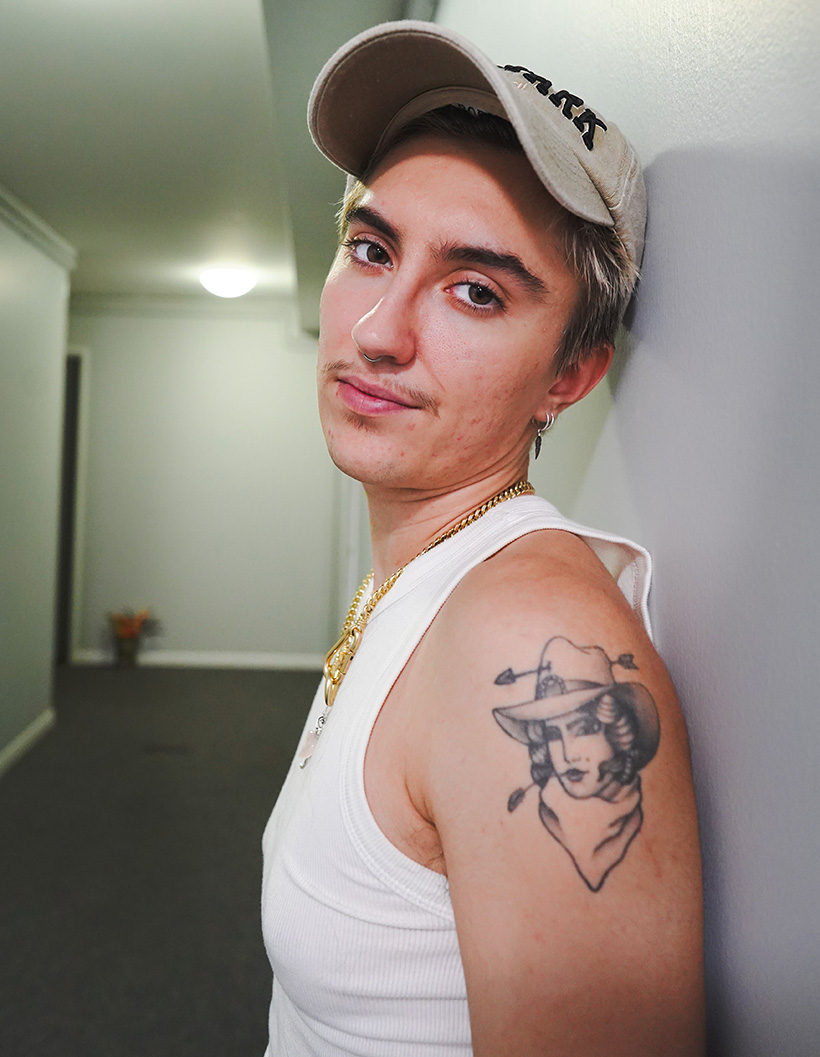
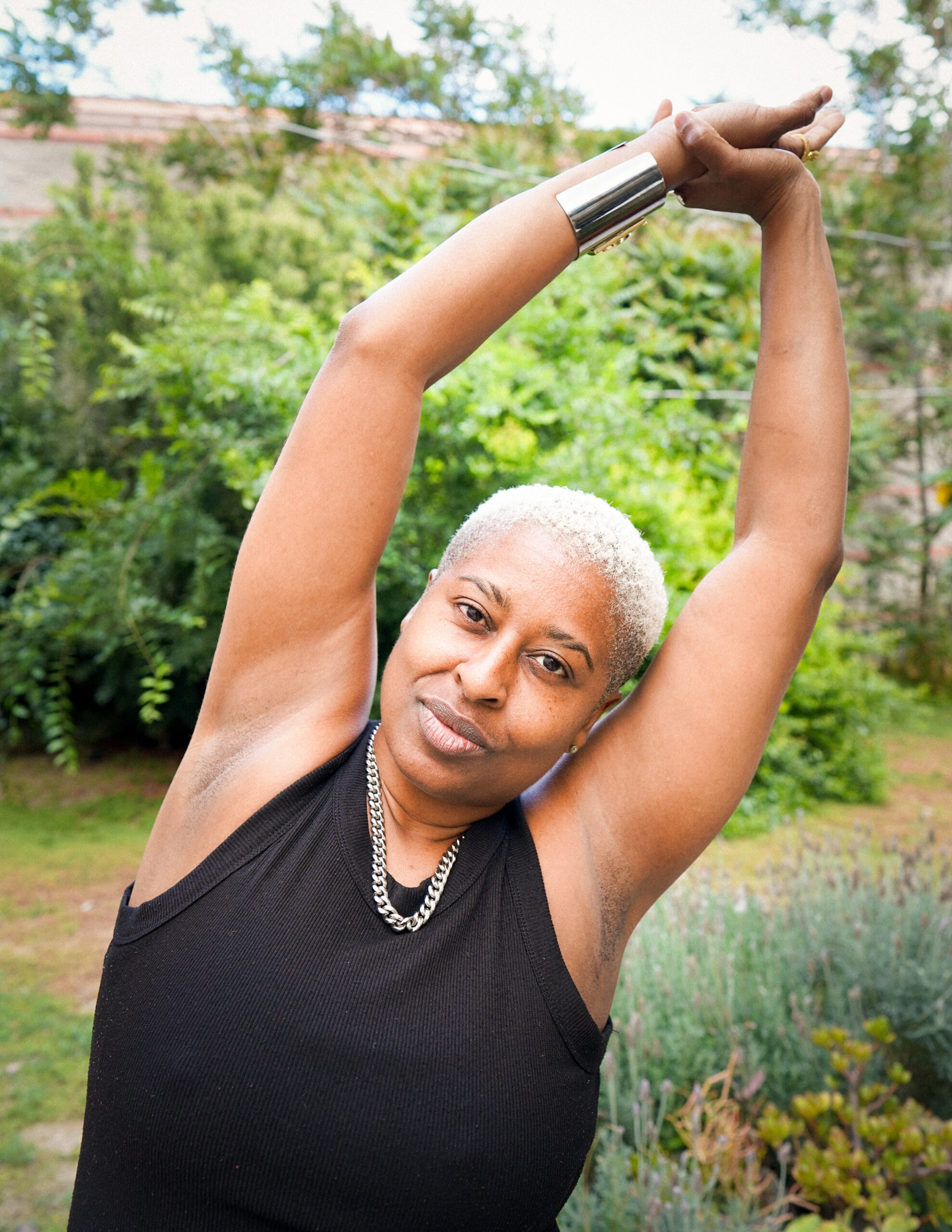
I was born and raised in Tacoma, Washington, and my family is from Denmark. I attended public school all my life and began calling myself (or perhaps first being called) a tomboy from about 1st grade. I am sure many people thought I would grow out of it, and there was a period of time in middle school where it was assumed to be behind me, but masculinity was fundamental inside me. It returned again in an epiphanic moment in 8th grade when I finally had the courage to call myself a lesbian, and return to the expression of masculinity I had so missed. This feeling never wavered. As my language and identity grew, my Butchness inherently grew alongside it. Since moving to Chicago and finishing graduate school, my confidence in calling myself a Butch—before anything else—has cemented. Now I work as a school psychologist and love being the Butch role model I never had growing up.

1. Can you recall the first time you heard the word ‘Butch’ ?

After coming out as a lesbian in junior high, I knew masculinity was a large part of my expression. Unfortunately, the history and warmth that the Butch identity has for me now, was no more than a misinterpretation of gender expression for young teenage Haleena. I’d been called a tomboy and a he-she from day one of 1st grade when I showed up to school with short hair and hand-me-downs from my older brothers, but Butch was never on the radar until junior high. It was new to me at that time, and it was scary.

The Butch Lesbians I had seen on TV and been told about were made out to be dirty, dangerous, male-wannabees by my peers and the adults around me.

“I’m not Butch,” I would think. “I’m just masc”

….Maybe people are less scared of that label…”

Unbeknownst to me, the Butch identity was so much more than a label, but in the world I inhabited, it was a word used to make masculine lesbians fearful of being too masculine for others. I hid from the word for a long time, but as I grew, and my understanding of queer history grew along with me, it began to rock back and forth in my mind.

2. How do you define Butchphobia?

Butchphobia, at best, is a misunderstanding and misattribution of our history and experiences, and at worst, the violence we face at the hands of oppressors who are fearful of our existence. I have experienced this range from a young age, whether it was the language used against me, or boys in my primary classes unzipping my clothes to see what they thought I was hiding under there. It developed from this to a grave misuse of my masculinity against me.

My refusal to press charges against my first girlfriend, even when offered the option, was in part due to a fear that people would never believe the masculine woman could ever be a victim of the feminine one. That was proven to me the first time I sought help.

This fear continued into my late teen and adult life, where I quickly gained a phobia of what I know as the “Predatory Lesbian Stereotype.” I don’t think I could describe a single locker room to you, as my eyes were and continue to be non-stop glued to the ground out of fear of making anyone have to think about my presence there for more than a second.

Butchphobia has built distrust in many people, some even within the queer community. It has been a heavy task to learn to live my life fully in spite of this.

3. Is there something about your butch identity that you feel is often misunderstood?

I think in general the Butch identity is gravely misunderstood by almost everyone, even other queer people and lesbians. Butches don’t imitate masculinity, we improve upon it. We don’t seek to copy maleness, we redefine it.

This was what made me nervous about going on testosterone. I saw very few ways in which I could explain to people, especially non-butches, that this addition to my life was to build upon my Butch lesbian identity, to engage in self-creation, not to change to something new entirely.

I do not have an interest in mimicking heterosexuality. Quite the opposite, I seek to broaden what we know about queer and lesbian relationships by elevating the masculine and feminine and Butch-Femme dynamics that overlap.

Although I do wish more people understood this, I am still well aware of the world I live in. Understanding it myself so I can be most comfortable with who I am, regardless of others, is what is most important of all.

4. Have there been aspects of your masculinity that you’ve felt compelled to unlearn?

There have been times when I felt like I had to perform a certain way to be validated in my masculinity of course. But this was strongest before I grew into my Butch identity and weakest when I felt misunderstood by partners and loved ones who did not think of the Butch identity positively. These lesser moments are when I felt the greatest desire to prove myself in some way, which usually ended with me not being the person that I wanted to be and not being the person that people in my life needed me to be.

Development of my Butchness and the confidence that followed made the need to constantly prove something disappear more and more, until I was able to begin to unlearn patterns in my relationships that often left me, and other people hurt. Of course, I say begin, because a process like this takes a long time.

In the months before meeting my current partner, I ended all my flings and situation-ships en masse and dedicated myself to seeking out community that cared for me as more than some imaginary masculine ideal in a made-up masc shortage.

This I initially found in a queer soccer team that has built itself into a haven for queer people of all backgrounds, often seeking first the camaraderie, and second the ball-kicking. The months that followed led me to my partner, and to lessons about myself I had been running from for a long time because I was too scared to face them alone.

5. What is the most unforgettable or impactful memory from your dating life?

There’s a lot I can say about my relationships and their impact on my understanding of self. My newly discovered lesbian identity in junior high was immediately built on a cracked foundation, as my first relationship with a woman in high school ended in me filing a protective order and winding up in year-long PTSD treatment. Relationships after this ebbed and flowed from sweet but inconsequential, to exciting but downright dangerous. This made finding the time and support to explore my masculine identity nearly impossible. Although I have always been the more masculine one in all my relationships, I do not believe that many people saw me for who I truly was until my current relationship. Of course, it was only a few months before I met my now-girlfriend that I really owned my Butch identity. This occurred the spring before, when I met a Butch for Butch couple, both on or having been on testosterone, and I was able to have these discussions with someone for the first time. My newly cemented identity was there, but someone who saw and desired it for what it was, was not.

In what ways do you express or embody masculinity that differ from social expectations?

I am in a Butch-Femme relationship. It has done incredible things in helping me gain confidence in my identity and my love for Butchness.

I love to take care of my Femme, and she takes care of me. And yes, I do build her furniture and open the car door for her and buy her dresses, but this is not done as a result of some desire to feel like The Man or in control, it is done as a dedication to her and us and the love that queer people have sought out and been denied time and time again.

She is capable of anything, and she does more for me than anyone has before. We aren’t mimicking heterosexual love; we are both defying societal expectations because we do these actions without expectations of the other at all. It all shapes who I am and who we are. The way I express my Butchness and masculinity and the way I care for my Femme is not impacted by societal expectations, but it certainly impacts them.

What is one belief or assumption you held in the past that turned out to be wrong?

I think when I was younger, I was constrained by a limited mindset when it came to identity. I did not have the language or historical context to understand vast lesbian identities, and likely would have never pictured myself going on testosterone and still identifying as a lesbian. In fact, at my coming out age and the few years that followed, I may have even felt like I was lying to myself.

It is so easy to be the judge of how others identify and express themselves when you feel like your own identity is so cut and dry. Once I started to expand on my own expression, and especially when HRT was quickly approaching the table, all that judgement of others seemed absolutely pointless. I knew I was about to begin something that many people would never understand, likely not even my younger self. If I knew the risk I was taking with my identity, and that it only mattered what I thought of my own, then why would I participate in the policing of anyone else’s? It changed so much for me, physically and emotionally.

I hope that if I were ever face-to-face with my younger self, I could explain this to her. She was scared, and she did not understand others and herself. She fought tooth and nail to get to where she is now, and I have to believe that above it all, we would be so proud of each other.